Key Takeaways
- Securing a supermajority in both chambers of the legislature allows the majority party to enact legislation into law regardless of the governor’s veto. So, like a “trifecta,” the majority party has a clear path to enact policies without threat of gubernatorial veto or roadblocks from the minority party.
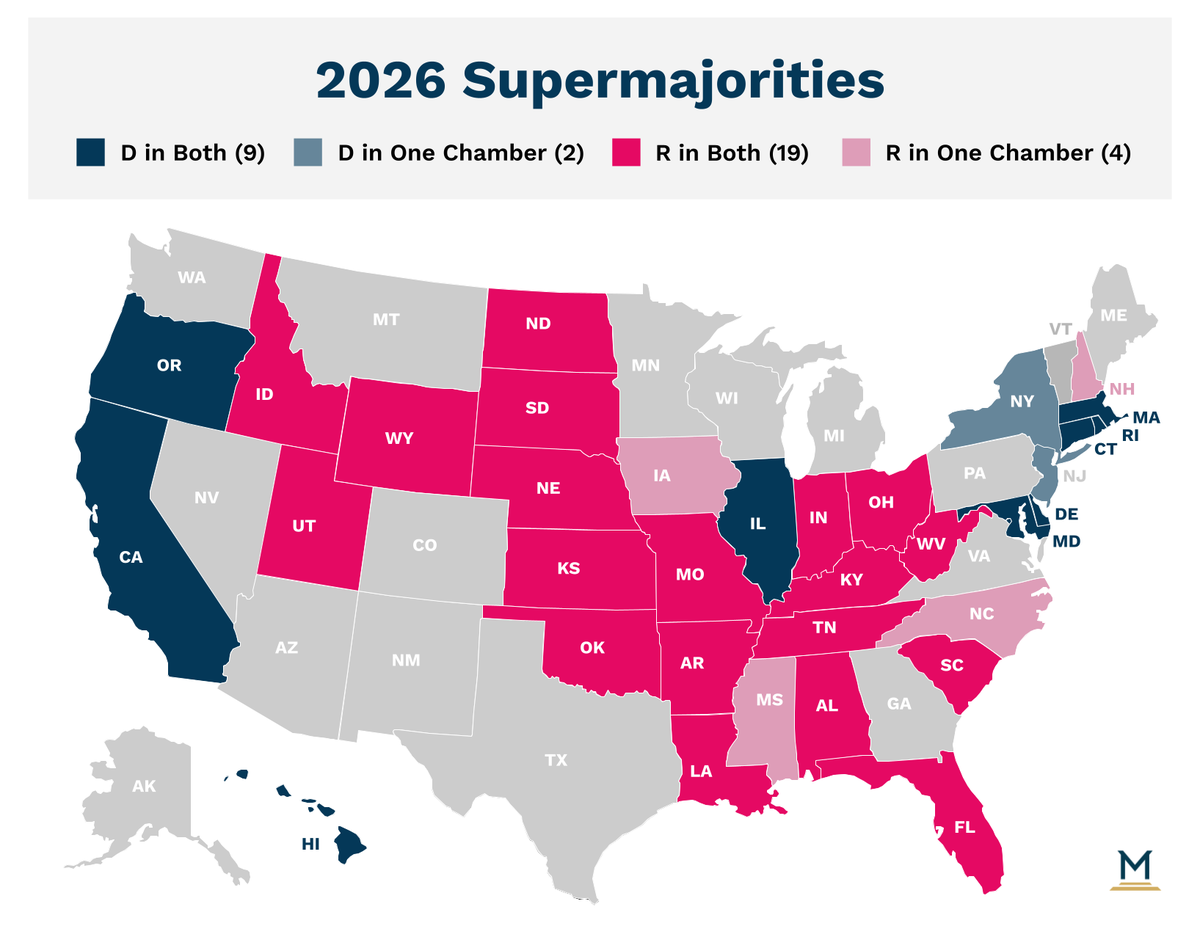
- In 2026, Democrats will have supermajorities in both chambers in 9 states and in one chamber in 2 states. Republicans will have supermajorities in both chambers in 19 states and in one chamber in 4 states.
- After the 2025 regular elections, two states had major changes to their supermajority status. Mississippi Republicans formerly had a supermajority in both legislative chambers, but after special elections have lost their supermajority in the Senate. Additionally, New Jersey Democrats secured a legislative supermajority in the Assembly. Additionally, Iowa Republicans lost their supermajority in one chamber (the Senate) in a September 2025 special election.
How Many States Have Republican Supermajorities in 2026?
In 2026, Republicans will have supermajorities in legilative both chambers in 20 states and in one chamber in 3 states.
How Many States Have Democratic Supermajorities in 2026?
In 2026, Democrats will have supermajorities in both legislative chambers in 9 states and in one chamber in 2 states.
2026 Supermajorities Map
Right click the map image to download an image file, or click the button to download a PDF version.