Compliance
September 2026 Lobbying Compliance and Campaign Finance Reporting Requirements
September 1, 2026 | Izzy Aaron, Vinnie Cannamela
November 11, 2025 | Megan Zeiss
Key Takeaways:
Whether it is on the federal, state, or local level, lobbying typically involves some form of communication between lobbyists and public officials regarding legislation or policy that is intended to influence said legislation or policy. However, each jurisdiction sets their own rules as to which types of communications actually qualify as lobbying, including testifying in front of a legislature, regulatory agency, commission, or similar entity. As a lobbyist, you may be asking “which states consider testimony lobbying and which do not consider testimony lobbying?”
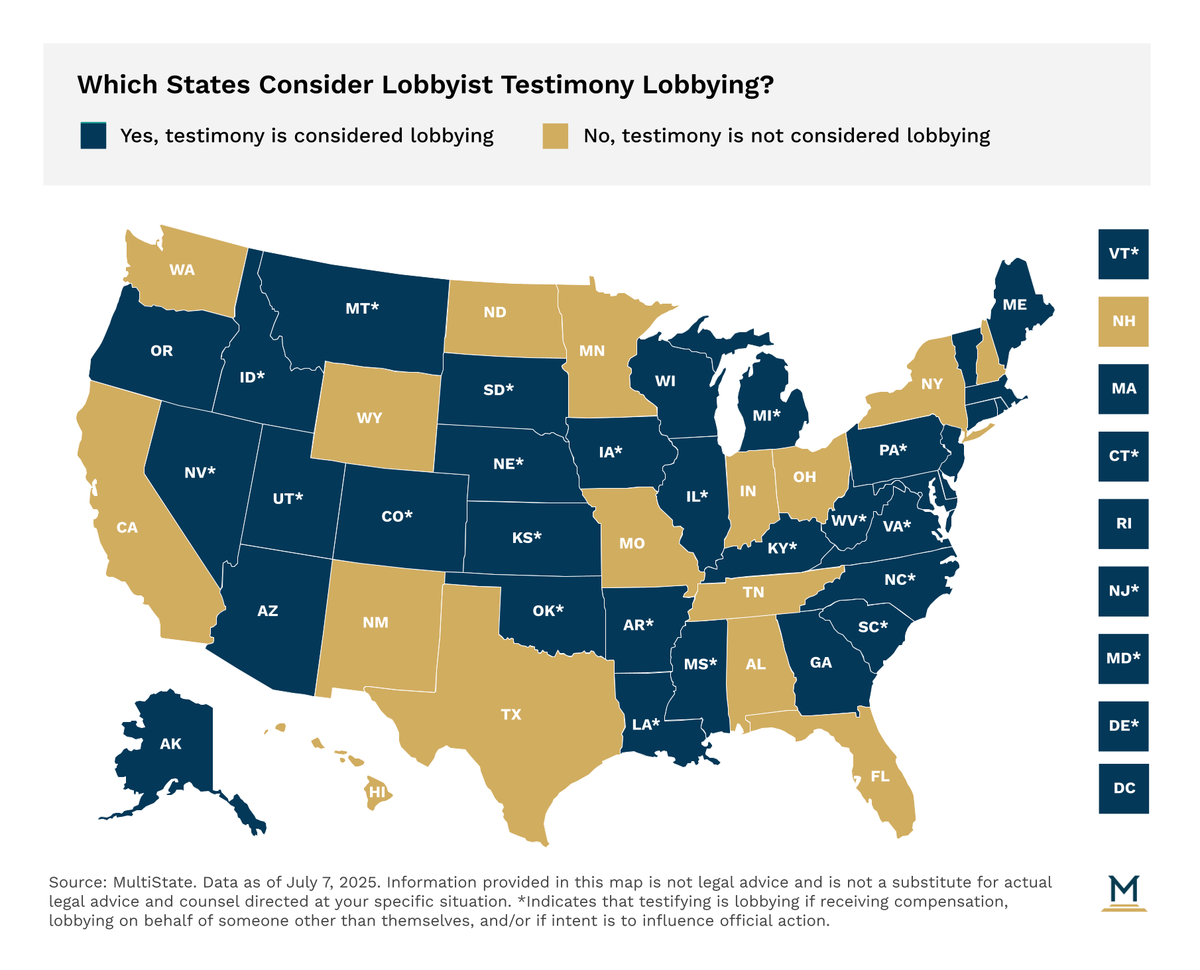
Some states, such as Maine, Massachusetts, and Wisconsin, consider testimony to be lobbying activity. What does this mean for lobbyists in these states? Lobbyists providing testimony in these areas should be careful to review their registration and reporting requirements to ensure compliance and avoid penalties.
On the other hand, many states clearly exclude testimony from the definition of lobbying, regardless of the purpose. Examples of these states include Kentucky and Ohio. By exempting testimony from the definition of lobbying, public citizens and lobbyists alike are able to speak in front of public bodies and provide their opinions. However, lobbyists testifying in states that exempt testimony from the definition of lobbying should still be cautious of what triggers their registration and reporting thresholds. For example, while Alabama broadly excludes unpaid testimony by citizens from its definition of lobbying, anyone who receives compensation or reimbursement to influence legislative or regulatory action is required to register. Thus, lobbyists and their employers should know when registration or reporting thresholds have been crossed to maintain compliance with state law.
Finally, some states consider testimony to be lobbying only if certain conditions are met. These conditions include:
When testimony is done to influence legislative or administrative action;
When lobbyists receive compensation above a certain threshold;
When the testifier engages in additional lobbying activity beyond their testimony;
When the testifier is appearing on behalf of someone other than themselves;
When the testifier is not specifically invited to provide testimony; or
When the testifier does not identify themselves and the interest(s) they represent
Testimony is an important part of the democratic process; however, it is clear that many states view testimony by lobbyists representing special interests very differently from testimony by individuals representing themselves. Lobbyists who wish to testify should be aware of the relevant laws in the jurisdictions they operate in to remain compliant.
September 1, 2026 | Izzy Aaron, Vinnie Cannamela
August 18, 2026 | Bradley Coffey
July 30, 2026 | Ben Zuegel, Vinnie Cannamela