Compliance
September 2026 Lobbying Compliance and Campaign Finance Reporting Requirements
September 1, 2026 | Izzy Aaron, Vinnie Cannamela
May 12, 2026 | Bradley Coffey
Key Takeaways:
With conference season in full swing, government affairs professionals are attending meetings across the country, including ALEC, NCSL, CSG, and NGA. Large, state policy-focused conferences draw not only private industry and interest groups, but also state and local officials. These events present numerous opportunities to meet new people, advocate on issues, and karaoke with the MultiState team—but can pose problems when attendees forget or don’t know the regulations that govern ethical lobbying conduct.
Conferences are not lobbying free-for-alls or regulation-free zones. If Georgia officials attend an event in Massachusetts, they are still governed by Georgia's laws pertaining to lobbyists and accepting gifts, including restrictions on meals, lodging, and travel. Similarly, those who intend to lobby those officials are required to adhere to Georgia's regulations when dealing with members of that contingent. If the same lobbyists also plan to meet with a Montana senator attending the event, they must operate within the lobbying regulation set forth by Montana’s code.
Adherence to these lobbying regulations means understanding what counts as lobbying activity in a jurisdiction before engaging in it. For example, Illinois is one of a handful of states that regulates “goodwill lobbying,” meaning that if you intend either now or in the future to use a relationship with a legislator for lobbying purposes, building a relationship with said legislator is considered lobbying activity. California, on the other hand, does not regulate goodwill lobbying and instead regulates direct communication with qualifying officials for the purpose of influencing legislative or administrative action, meaning if your communication with a legislator is not intended to influence pending legislative or administrative action, you are not lobbying.
In addition to understanding thresholds, conference registrants should have an idea of what their agenda might include before the event, especially if meeting with public officials in an advocacy-related capacity is part of their plan. Awareness of the desired outcomes ahead of time allows attendees to identify whether or not activity will qualify as lobbying, giving them ample time to coordinate registration in the controlling state or jurisdiction. Georgia, for example, requires registration prior to engaging in lobbying, as do Illinois, Virginia, and a host of other states.
Lobbyists should also be aware of how permissive a state’s gift laws are.
Want to take some legislators to dinner one night? If a lobbyist is registered in Colorado, they had better not pay for a public official’s lunch—otherwise they are in violation of the Colorado constitution. Similarly, lobbyists registered in Kentucky are prohibited from providing public officials even a cup of coffee thanks to the Commonwealth’s strict ethics rules.
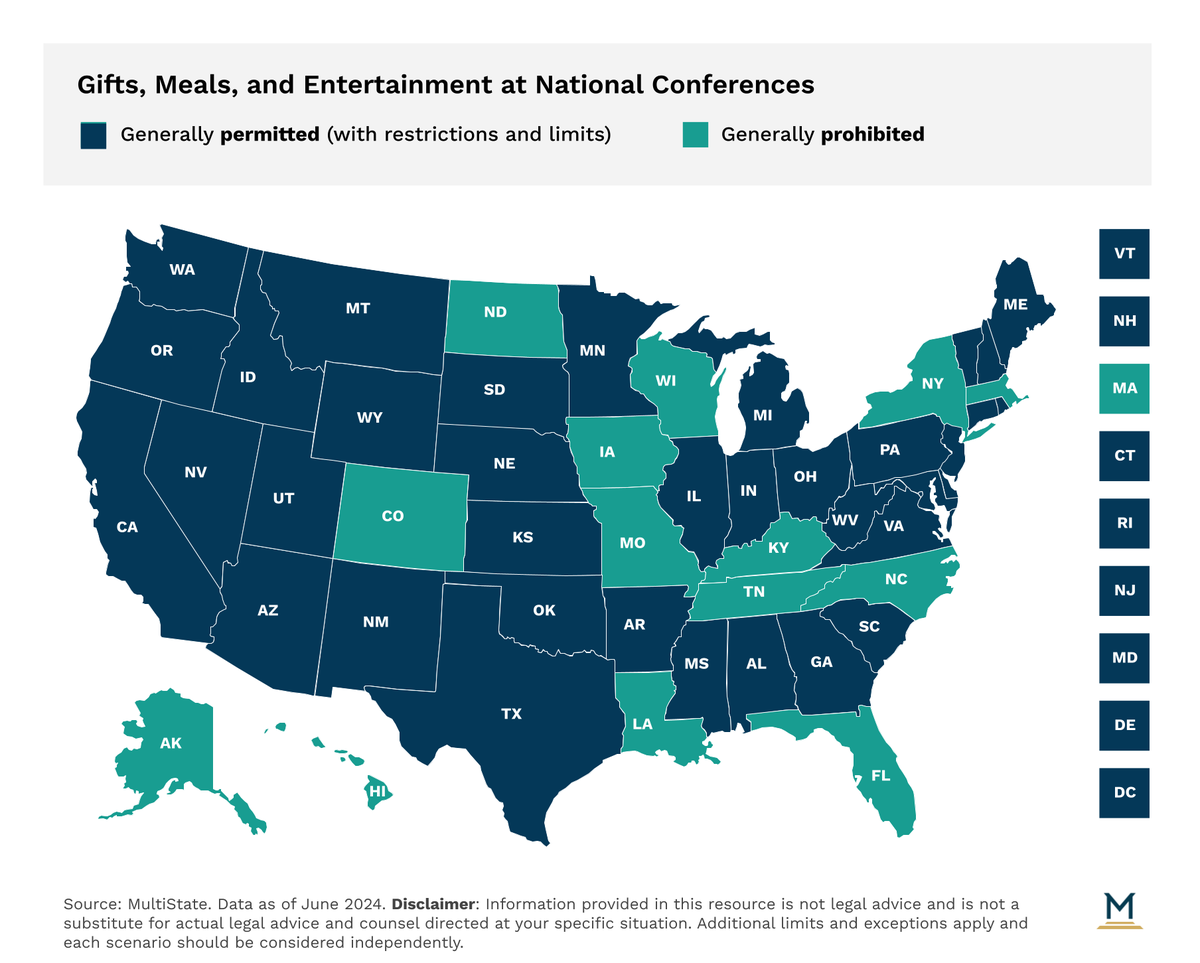
Thinking about giving a campaign contribution while at the conference? Make sure you’re not giving during a legislative session or the state the legislator is from does not prohibit contributions by registered lobbyists and/or their principals. North Carolina prohibits contributions from lobbyists registered with the Secretary of State’s office while Minnesota prohibits campaign contributions during the legislative session. Minnesota’s law goes one step further to prohibit purchasing fundraising event tickets for events that are held during the legislative session.
The Bottom Line
Lobbying is all about relationships, and as in any relationship, problems are most successfully avoided when each party is aware of their responsibilities. Public officials should be well-versed in their own state or jurisdiction’s legal constraints on their activity with lobbyists, and government relations professionals must be aware of what actions are permissible before working with officials. By adopting a mindset of personal accountability, conference attendees avoid potentially serious legal and professional complications arising from a shaky understanding of the rules.
Keeping up with rules, deadlines, and often confusing requirements is a daunting prospect for teams of all sizes. Let us manage your federal, state, and local registration and reporting responsibilities, or manage your Campaign Finance program. Read more about our Compliance Services here, or get in touch here.
September 1, 2026 | Izzy Aaron, Vinnie Cannamela
August 18, 2026 | Bradley Coffey
July 30, 2026 | Ben Zuegel, Vinnie Cannamela