Compliance
September 2026 Lobbying Compliance and Campaign Finance Reporting Requirements
September 1, 2026 | Izzy Aaron, Vinnie Cannamela
July 30, 2026 | Ben Zuegel, Vinnie Cannamela
Key Takeaways:
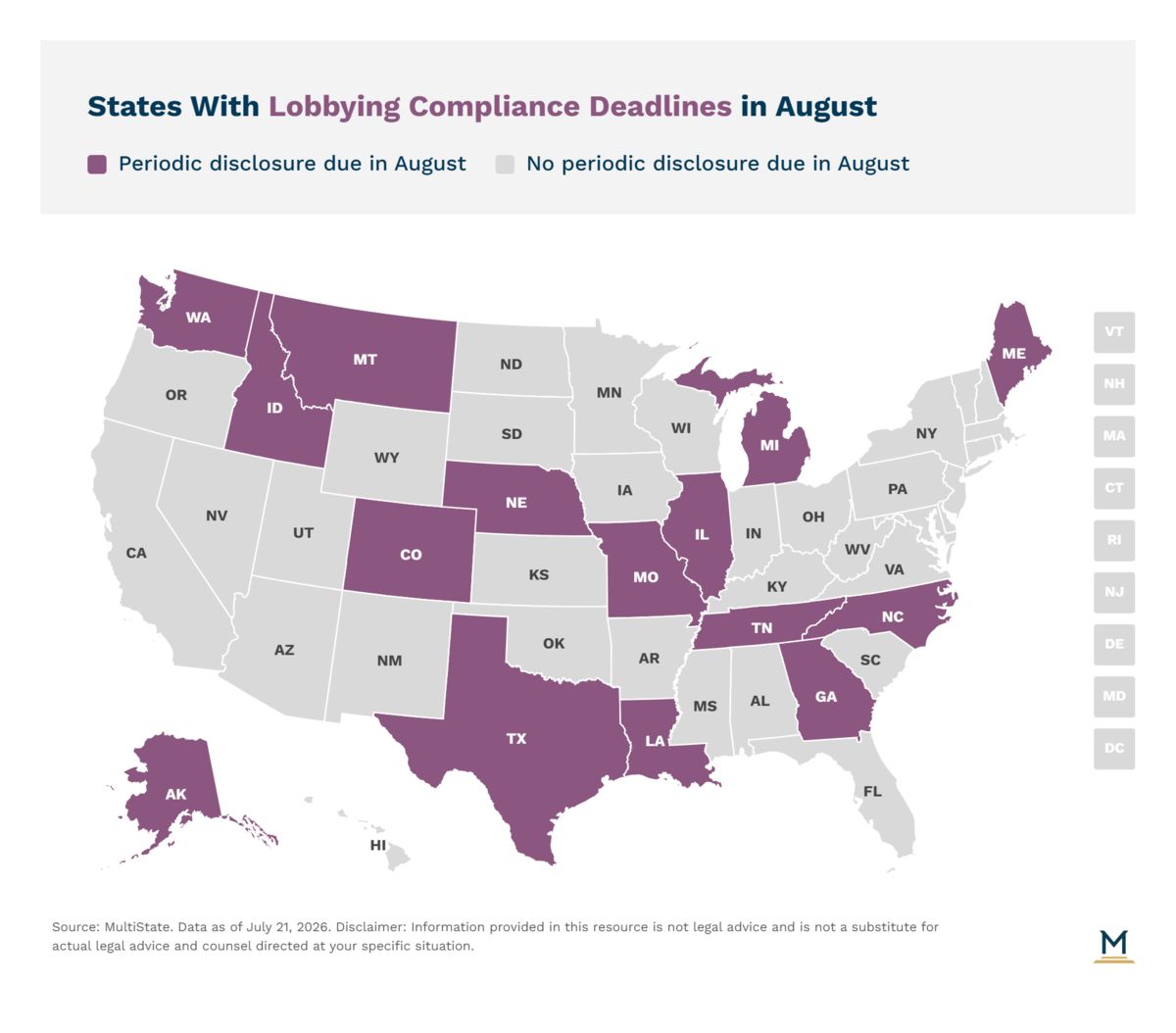
August is a slower month for compliance, since most legislatures are out of session and many states no longer require monthly reports. Reports are due in 15 states, 4 localities, and Canada Federal. See the map and table below to view all jurisdictions with deadlines in August.
U.S. Localities with Disclosure Reports Due in August 2026
| State | Localities |
| California | City and County of San Francisco |
| City of San Jose* | |
| New Jersey | Jersey City |
| Washington | City of Seattle |
*The City of San Jose requires weekly disclosure reporting.
Additionally, Idaho and Louisiana may require you to submit more than one disclosure report this month, depending on the level or branch of government you are registered in (e.g., executive, legislative, judicial, or local).
As a reminder, lobbying in a locality can also trigger registration and reporting requirements at the state level. In states like New York, lobbying any locality or municipality will require a state registration and state bi-monthly disclosure reports, even if you do not lobby at the state level. Make sure that if you lobby in New York, you are registered with the New York State Commission on Ethics and Lobbying in Government (COELIG) to avoid hefty fines.
In August, 21 states have campaign finance disclosure deadlines, in addition to Washington DC and the Federal Election Commission (FEC). If a political committee is registered in one of these states and is required to file disclosure reports, they must do so in August. Check out the map below for the states with important deadlines this month.
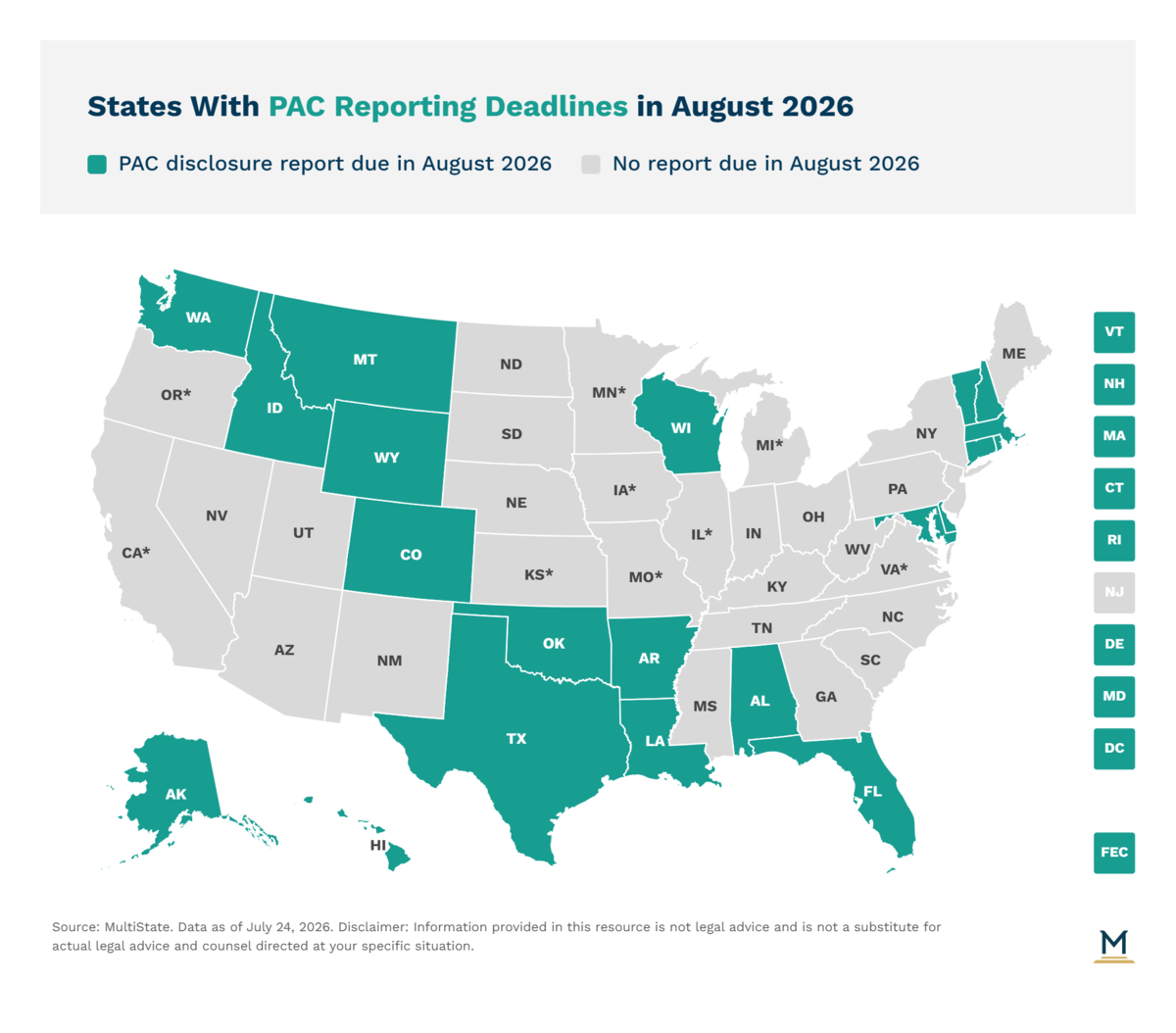
Political committees should be aware of their filing schedules. Some jurisdictions (Texas, for example) give the option to report monthly or quarterly. Also, be aware that some states require a political committee to report large contributions within a set time frame of receipt. Political committees should review contributions carefully to ensure they do not miss a required contribution- or expenditure-triggered deadline.
Keeping up with rules, deadlines, and often confusing requirements is a daunting prospect for teams of all sizes. Let us manage your federal, state, and local registration and reporting responsibilities, or manage your Campaign Finance program. Read more about our Compliance Services here, or get in touch here.
What states have lobbying disclosure reports due in August 2026?
Fifteen states have lobbying disclosure reports due in August 2026, along with four U.S. localities and Canada Federal. Idaho and Louisiana may require multiple disclosure reports depending on the level or branch of government where you are registered, such as executive, legislative, judicial, or local.
Does lobbying at the local level trigger state registration requirements?
Yes, lobbying at the local level can trigger both registration and reporting requirements at the state level in certain jurisdictions. In New York, lobbying any locality or municipality requires registration with the New York State Commission on Ethics and Lobbying in Government (COELIG) and bi-monthly state disclosure reports, even if you do not lobby at the state level.
Which localities require lobbying disclosure reports in August 2026?
Four U.S. localities require lobbying disclosure reports in August 2026: City and County of San Francisco, City of San Jose (weekly reporting), Jersey City in New Jersey, and City of Seattle in Washington. The City of San Jose is unique in requiring weekly disclosure reporting rather than monthly.
How many states have campaign finance disclosure deadlines in August 2026?
Twenty-one states have campaign finance disclosure deadlines in August 2026, in addition to Washington DC and the Federal Election Commission (FEC). Political committees registered in these states must file disclosure reports if they are required to do so according to their filing schedules.
What should political committees know about contribution reporting deadlines?
Political committees should be aware that some states require reporting of large contributions within a set time frame of receipt, in addition to regular monthly or quarterly filing schedules. Committees must review contributions carefully to ensure they do not miss required contribution- or expenditure-triggered deadlines, as filing schedules can vary by jurisdiction.
September 1, 2026 | Izzy Aaron, Vinnie Cannamela
August 18, 2026 | Bradley Coffey
July 2, 2026 | Ben Zuegel