
Legal, Employment & Labor
The New Economics of College Athletics (An Update on Name, Image, and Likeness Laws)
September 29, 2026 | Marvin Yates
April 28, 2026 | Sandy Dornsife
Key Takeaways:
The American judicial system has a long history of enforcing the right of a parent to make decisions regarding the upbringing of their child. Recently, parental rights have been the focus of a variety of LGBTQ+ policies by advocates on both sides, including by the LGBTQ+ community for the protection of gender-affirming care and by other groups to limit how LGBTQ+ issues are incorporated into public education. This month, the Supreme Court reached a decision that reinforces this fundamental right in relation to one such policy.
Judicial acknowledgment of parental rights reaches back to the early twentieth century. In Meyer v. Nebraska (1923) and Pierce v. Society of Sisters (1925), the Supreme Court upheld the right of parents to direct the education of their children, permitting students to be taught different languages and attend private schools, respectively. Parham v. J.R. (1979) reinforced these same principles in regard to a parent’s right to make medical decisions, and in Troxel v. Granville (2000) the court again asserted that a parent has a “fundamental right to make decisions concerning the care, custody, and control of their children.” While courts disagree as to the constitutional basis for the right, whether it be the Fifth Amendment’s Due Process Clause, the Ninth Amendment’s reservation of non-enumerated rights for the people, or the Fourteenth Amendment’s prohibition against the deprivation of “life, liberty, or property, without due process of law,” there is general agreement that such a right exists.
A few years ago, California tested the limits of these rights when legislators enacted the SAFETY Act; a law that prohibits schools from requiring staff members to reveal a student’s sexual orientation, gender identity, or gender expression to any other person, including a parent or legal guardian, without a student’s consent. Soon after enactment, two teachers and a group of parents sued the state in Mirabelli v. Bonta, alleging that the SAFETY Act violated both their religious and parental rights. In December 2025, a federal district court issued a preliminary injunction against the state policies; however, on appeal, the U.S. Court of Appeals for the 9th Circuit put that order on hold.
This month, however, the Supreme Court stepped in on an emergency basis, without the full briefing and arguments that normally precede a ruling, and put the block on California's policies back in place. In a 6-3 vote, the Court held that California’s policies would “likely trigger strict scrutiny…because they substantially interfere with the ‘right of parents to guide the religious development of their children.’” The majority also argued that the policies were not narrowly tailored and that the State’s interest in student safety could be served by “precluding gender-identity disclosure to parents who would engage in abuse.” In reaching this decision, the Supreme Court relied heavily on its 2025 decision in Mahmoud v. Taylor where it held that parents must be given advance notice of the use of LGBTQ+ books in public school curriculum, as well as the opportunity to opt out of such instruction. In Mahmoud, the Court agreed with the plaintiffs’ argument that these actions were necessary in order to preserve parents’ rights to “direct the religious upbringing of their children.” Three justices dissented. Justice Kagan, joined by Justice Jackson, dissented, arguing that the Court moved too fast on a complicated issue without giving both sides a proper chance to make their case. Justice Sotomayor also dissented but did not join Kagan's written opinion. Advocates for LGBTQ+ students have argued that mandatory disclosure policies put transgender youth at risk at home. While Mirabelli will now continue through the lower courts for determinations on the merits of the case, the Supreme Court’s enforcement of the injunction makes it unlikely that California will be able to successfully defend its policies.
Although California was the first state to effectively prohibit what LGBTQ+ advocates call 'forced outing' of students, LGBTQ+ organizations continue to argue that disclosure without a student's consent can put that student at risk at home. That concern has not slowed the push in many states for laws requiring schools to notify parents.
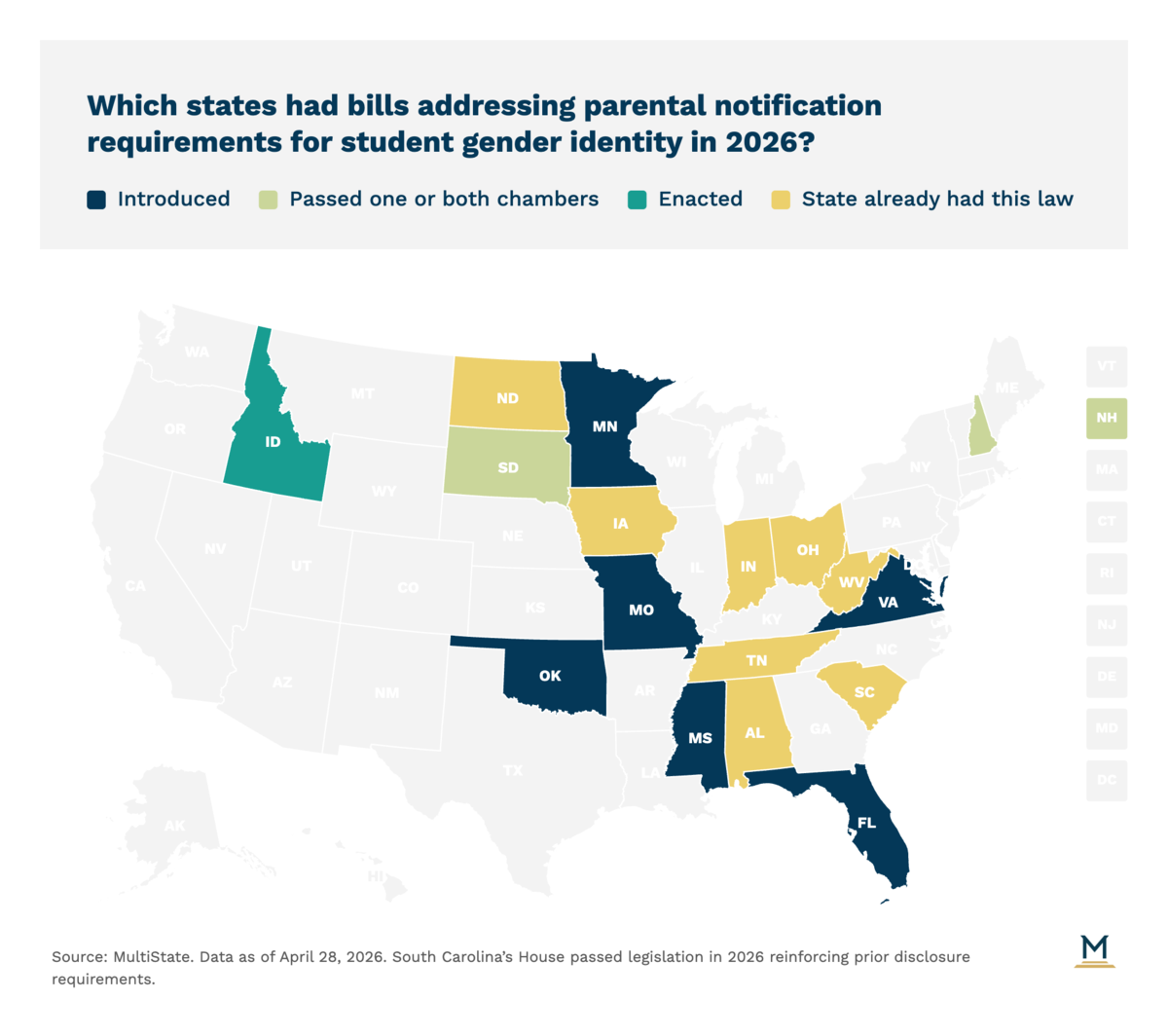
Indiana, Iowa, Ohio, South Carolina, Tennessee, and West Virginia have all enacted laws requiring schools to disclose students' gender identity preferences, and two other states, Alabama and North Dakota, require disclosure if a parent asks the school for information.
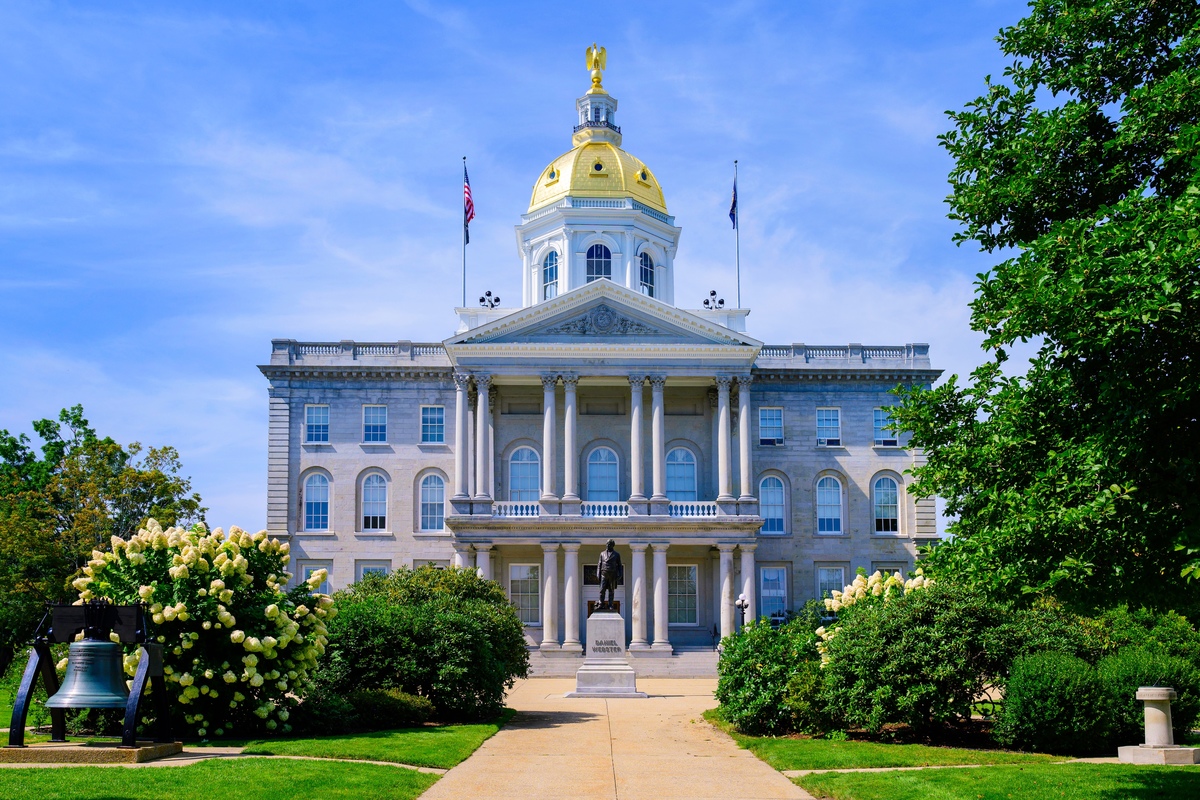
The trend has continued into the 2025-2026 legislative session where at least ten states considered bills either requiring school employees to disclose issues concerning the gender-identity of students to parents/guardians or prohibiting school employees from withholding such information. Bills in South Carolina and South Dakota both made it through the first house, and a bill in Idaho requiring parental notification within 72 hours if a minor expresses a desire to socially transition was enacted. Additionally, a bill in New Hampshire that requires educators to respond completely and honestly to written parent and legal guardian inquiries regarding their children has also passed the first house; however, it contains an exception that permits an educator to withhold information if they have a good faith belief that disclosure would put the student at imminent risk of physical harm, abuse or neglect, provided that the educator reports the risk to the Department of Health and Human Services. This exception seems to fall directly in line with the narrow tailoring proposed by the court in Mirabelli.
The new ruling will likely play a major role in even more states pursuing policies requiring schools to disclose information to parents and guardians. LGBTQ+ advocacy organizations will likely transfer their focus toward pushing for safety exceptions in disclosure laws such as those contained within the New Hampshire bill. The legal dispute will then become who determines whether a student is at risk and what level of risk permits the withholding of information. With such questions still in play, these laws are likely to continue to appear in American courts.
Federal and state legal activity can have significant policy and regulatory implications for businesses and organizations. If your organization would like to further track federal and state legal activity, please contact us.
September 29, 2026 | Marvin Yates

July 30, 2026 | Sandy Dornsife
-f5e651-400px.jpg)
June 10, 2026 | Sandy Dornsife