Elections & Campaigns, Health Care & Wellness
MAHA Political Endorsements Target August Republican Primaries
August 11, 2026 | Katherine Tschopp
January 23, 2026 | Mary Kate Barnauskas
Key Takeaways:
At the end of each year, our policy analysts share insights on the issues that have been at the forefront of state legislatures throughout the session during their review of thousands of bills across all 50 states. Here are the big developments and high-level trends we saw last year in the reproductive health space, plus what you can expect in 2026.
Even though 2025 was not a major election year, ballot measures continued to be a driver of reproductive health policy. Lawmakers in Missouri and Montana attempted to overturn voter-enacted abortion protections with ballot measures of their own. Missouri was successful, and a ballot measure is set to go before voters in 2026. Meanwhile, in Montana, lawmakers failed to gain the two-thirds vote necessary to put a measure to establish fetal personhood on the ballot.
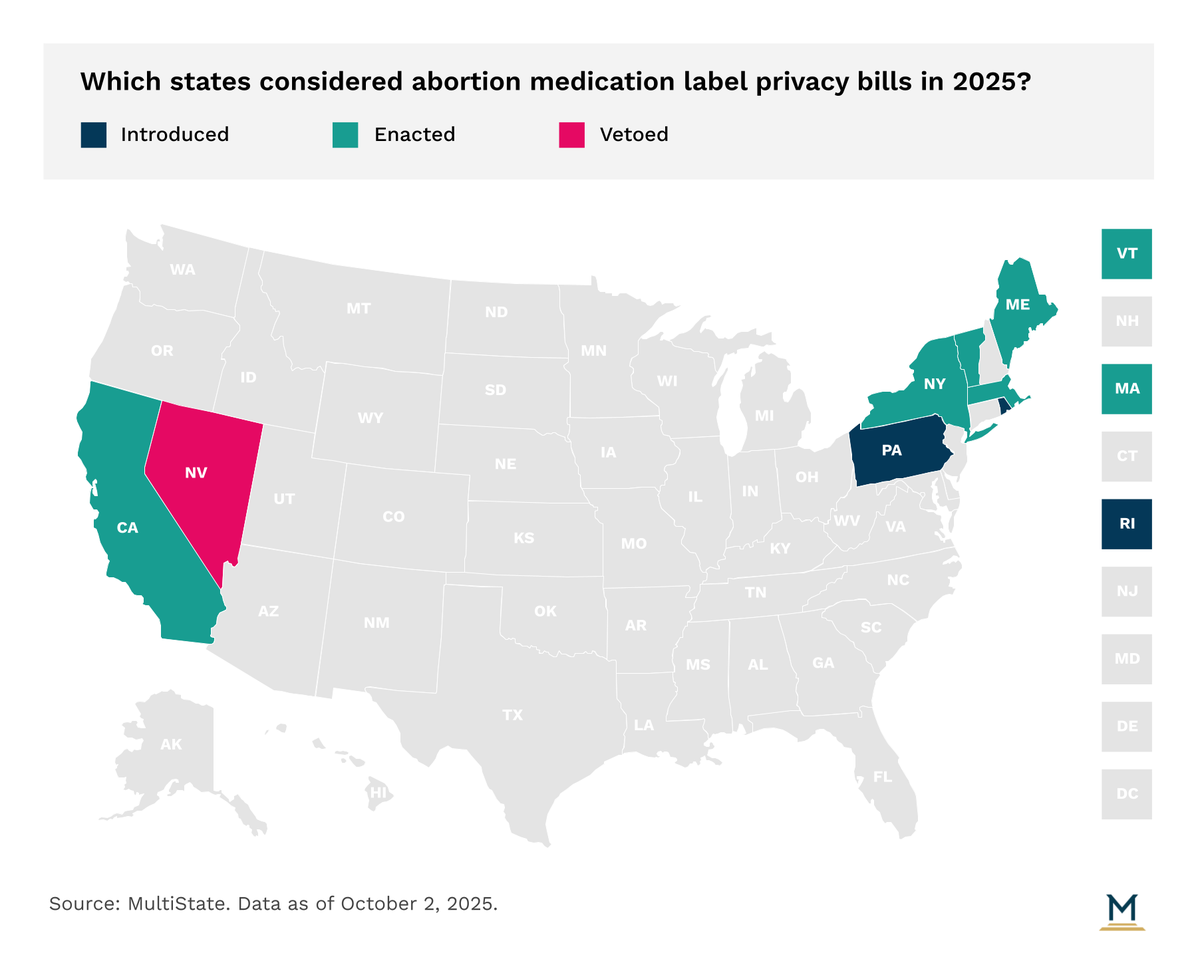
Abortion medications continued to be highly contentious within reproductive health policy. Republican attorneys general in Texas and Louisiana are pursuing civil and criminal cases against a New York doctor who allegedly mailed abortion pills to patients in their states. In response, California, New York, Colorado, Maine, Massachusetts, and Vermont enacted measures to allow abortion medication prescription labels to list the health care facility instead of the prescribing clinician, a move intended to protect providers. Meanwhile, Louisiana and Texas enacted further restrictions on abortion medications. Louisiana HB 575 authorizes a woman to pursue damages against any person or entity who knowingly performs or substantially facilitates an abortion, which is defined as administering, prescribing, dispensing, distributing, selling, or coordinating the sale of an abortion-inducing drug to a person in this state. Texas enacted HB 7 during a special session to authorize private citizens to sue individuals for mailing, prescribing, or providing abortion medication to patients in the state.
Emergency abortions have also been a point of interest this past session. Since strict abortion bans have gone into place, exceptions for medical emergencies have been the subject of litigation as abortion advocates and providers have contended they are vague and dangerous. In 2025, Arkansas, Kentucky, Tennessee, and Texas enacted bills to clarify the circumstances under which abortions may be performed under their bans. However, providers and abortion proponents have been skeptical of the clarifications. Notably, Kentucky Gov. Beshear (D) vetoed Kentucky’s bill over concerns that the measure could further restrict access to medical care, but the legislature voted to override the veto.
On the other hand, following the U.S. Supreme Court’s dismissal of a case concerning the federal Emergency Medical Treatment and Active Labor Act (EMTALA) in 2024 and the Trump Administration’s rescission of EMTALA abortion guidance, blue states have moved to codify related federal protections into state law. Colorado, New York, Washington, Massachusetts, and Connecticut all enacted similar legislation to require hospitals to provide necessary stabilizing care, including emergency abortions, to patients with emergency medical conditions.
In 2025, in vitro fertilization (IVF) was a key consideration for several states in 2026 in response to a 2025 court case in Alabama, LePage v. Center for Reproductive Medicine, which found that all unborn children, regardless of their location, are considered children under the state’s Wrongful Death Act. The case sparked national debate on IVF, especially in relation to abortion laws. In 2026, Tennessee, Georgia, Louisiana, and Nevada enacted legislation protecting access to IVF.
With 2026 being an election year, ballot measures related to reproductive health policy will gain attention. As noted previously, voters in Missouri will be voting on a ballot measure to repeal reproductive rights that were approved in 2024. Voters in Nevada will also see abortion on the ballot again, as the state requires citizen-initiated constitutional amendments to be approved in two consecutive elections. In 2024, over 64 percent of voters approved the initiative, which would establish a constitutional right to abortion. Other ballot measures for 2026 are also in the works in Virginia and Idaho. The Virginia General Assembly passed a resolution to propose a constitutional amendment to establish a fundamental right to reproductive freedom in 2025. In Virginia, legislatively referred constitutional amendments must pass by a simple majority vote in two successive legislative sessions to appear on the ballot, making the 2025 election significant for reproductive policy in the state. In Idaho, which currently enforces a full abortion ban, a citizen-initiated measure to establish the right to reproductive freedom and privacy could appear on the 2026 ballot as organizers are gathering signatures.
Abortion medication will also be a major topic of debate in the states in 2026. Other red states may try to replicate laws like those passed in Texas and Louisiana to restrict access, while blue states will look to enact further protections. In addition, the results of several pending lawsuits could have major implications for access across the country. The ongoing lawsuits could also have a significant impact on shield laws, which seek to protect abortion providers and patients from out-of-state actions. In addition, several Republican states have brought a case against the Food and Drug Administration (FDA) over the approval of mifepristone, one of the two drugs used in the abortion medication regimen. The lawsuit is the continuation of a case that made it to the U.S. Supreme Court in 2024 but was ultimately dismissed. Also of note, the Trump Administration has initiated a review of mifepristone’s safety. Both the lawsuit and review of the drug could impact access to the drug nationwide, which could prompt blue states to take action to protect access through strategies such as stockpiling.
MultiState’s team is actively identifying and tracking reproductive health issues so that businesses and organizations have the information they need to navigate and effectively engage. If your organization would like to further track these or other related issues, please contact us.
August 11, 2026 | Katherine Tschopp
June 8, 2026 | Mary Kate Barnauskas

May 12, 2026 | Mary Kate Barnauskas