Elections & Campaigns
State Abortion Ballot Measures Return in the 2026 Midterms
October 20, 2026 | Mary Kate Barnauskas
Key Takeaways:
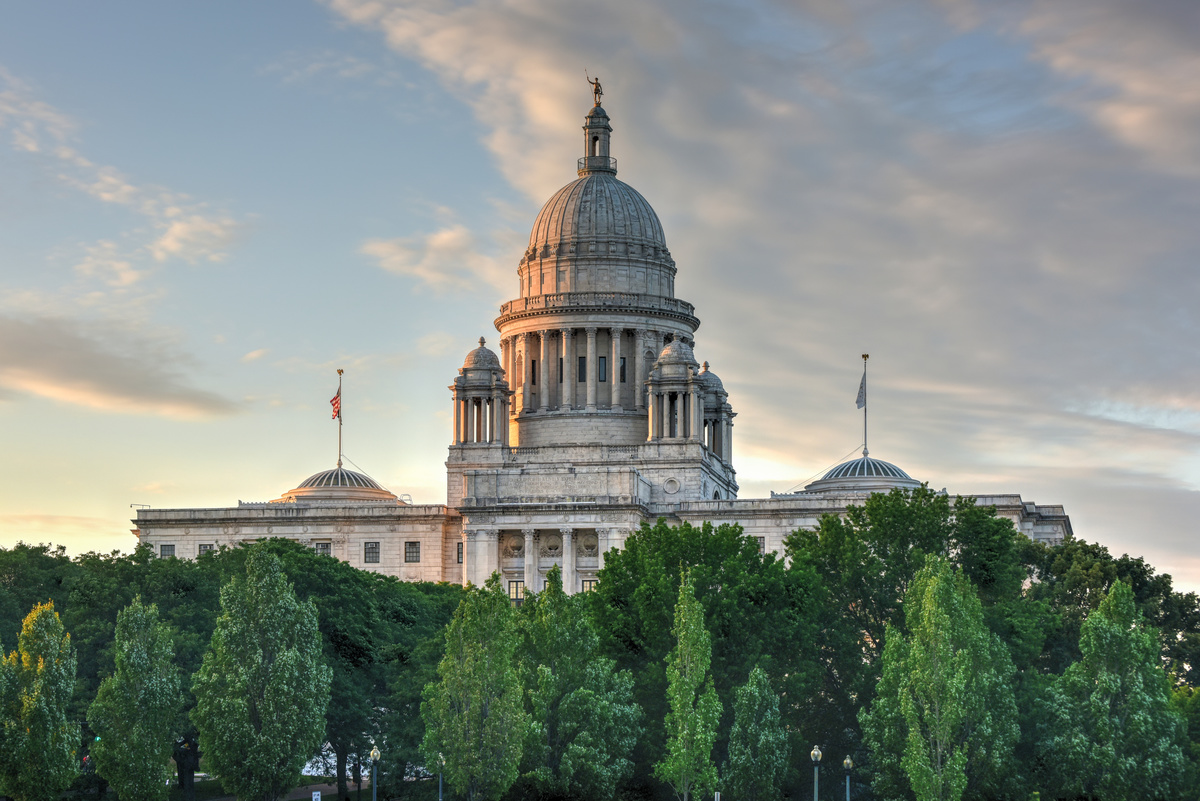
Rhode Island Governor Dan McKee (D) lost his primary election yesterday to former CVS Health executive Helena Foulkes, becoming the first governor elected to a full term to lose a primary since Hawaii's Neil Abercrombie (D) in 2014. Kansas Gov. Jeff Colyer (R) lost the 2018 Kansas primary, but he had never won the office outright, having ascended after Governor Sam Brownback (R) resigned.
McKee also ascended (after Gina Raimondo (D) became U.S. Secretary of Commerce in 2021), but he won a full term in 2022. However, that 2022 election foreshadowed yesterday's loss. While McKee won the general with 58% of the vote, he squeaked by in the Democratic primary with 33% of the vote, edging the candidate who defeated him yesterday — Helena Foulkes — by 3 points. Foulkes' victory in Wednesday's primary was dominant and in line with polling. She earned 63% of the vote to McKee's 38% and carried every city and town in the state.
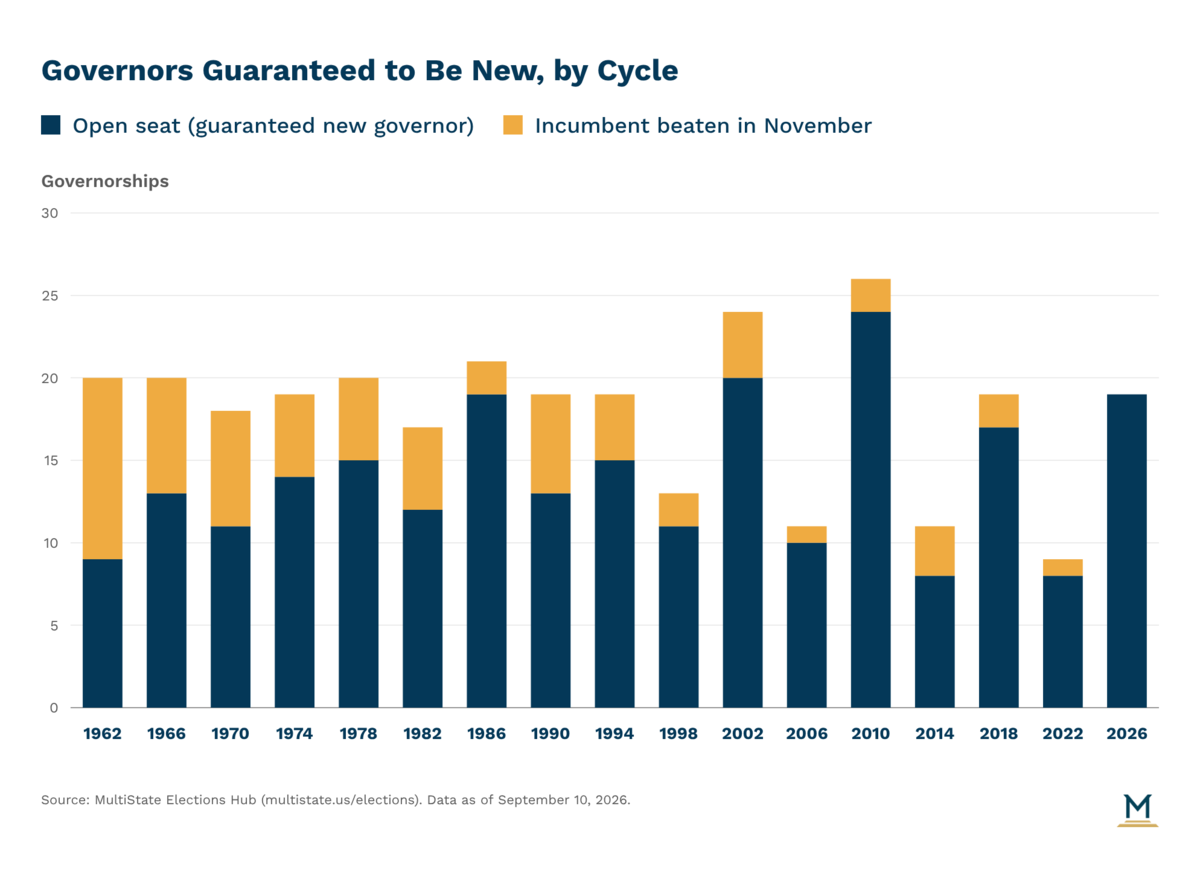
More importantly, for those looking at the national governors' map, McKee's loss means there will now be 19 gubernatorial general elections this year without an incumbent running. So we're guaranteed at least 19 new faces in governor's mansions next year. That number is the highest we've seen since 2010, when 24 gubernatorial generals had no incumbents — the highest number since Hawaii became a state in 1959. This year's 19 new faces is the third highest (tying with the 1986 election) since we've had 50 states.
The chart below also shows incumbents defeated in November, via the yellow bars, shrinking over time. As we've discussed, incumbent governors have become very hard to beat. We'll have to wait until November to see how much yellow the 2026 bar picks up.
Foulkes will head to the general as the heavy favorite (our composite forecast rates Rhode Island as a "Very Likely Democratic" race). But which gubernatorial elections could push that number higher in November?
The most obvious is Nevada, where Governor Joe Lombardo (R) is running for a second term against AG Aaron Ford (D). Our composite ratings list Nevada as a "Tilt Republican" race, but the polling average has Lombardo up by less than a point and the prediction markets give him a 60% chance of reelection.
The other gubernatorial race to keep an eye on as a potential incumbent defeat is Arizona, where Gov. Katie Hobbs (D) is seeking a second term. Our forecasting average lists Arizona as a "Lean Democratic" seat. But Gov. Hobbs is in a better position than Gov. Lombardo, with a comfortable 7 point lead over challenger Andy Biggs (R) in the polling average. Prediction markets think she's relatively safe for reelection at 87% odds. Otherwise, most of the competitive gubernatorial elections this year are for those many open seats with no incumbent on the ballot (e.g., GA, AK, IA, KS, OH, MI, WI).
Find more election coverage, fun visuals like those above, primary results and recaps, governor forecast analysis, and historical results at the MultiState Elections website.
Federal and state elections and redistricting can have significant policy and regulatory implications for businesses and organizations. If your organization would like to further track federal and state elections, please contact us.
Who defeated Dan McKee in the Rhode Island Democratic gubernatorial primary?
Helena Foulkes, a former CVS Health executive, defeated Dan McKee in the Rhode Island Democratic gubernatorial primary. Foulkes earned 63% of the vote to McKee's 38% and carried every city and town in the state.
When was the last time a governor elected to a full term lost a primary before Dan McKee?
The last governor elected to a full term to lose a primary before Dan McKee was Hawaii's Neil Abercrombie (D) in 2014. Kansas Gov. Jeff Colyer (R) lost a 2018 primary but had never won the office outright, having ascended after Governor Sam Brownback resigned.
How many gubernatorial general elections in 2026 will have no incumbent on the ballot?
There will be 19 gubernatorial general elections in 2026 without an incumbent running, guaranteeing at least 19 new faces in governor's mansions. That number ties with the 1986 election for the third highest since the U.S. has had 50 states, and is the highest since 2010, when 24 gubernatorial generals had no incumbents.
What were Dan McKee's margins in the 2022 Rhode Island Democratic primary versus the 2026 primary?
In the 2022 Democratic primary, McKee won with 33% of the vote, edging Helena Foulkes by 3 points. In the 2026 primary, Foulkes reversed that outcome decisively, earning 63% of the vote to McKee's 38%.
Which incumbent governors are considered most at risk of losing their reelection races in 2026?
Nevada Governor Joe Lombardo (R) and Arizona Governor Katie Hobbs (D) are identified as the incumbents most at risk. Lombardo's polling average shows him up by less than a point with prediction markets giving him a 60% chance of reelection, while Hobbs holds a 7-point lead in the polling average with prediction markets placing her reelection odds at 87%.
October 20, 2026 | Mary Kate Barnauskas
October 16, 2026 | Bill Kramer
October 14, 2026 | Bill Kramer