Elections & Campaigns
State Elections to Watch Closely Tonight
November 3, 2026 | Bill Kramer
November 12, 2026 | Sandy Dornsife
Key Takeaways:
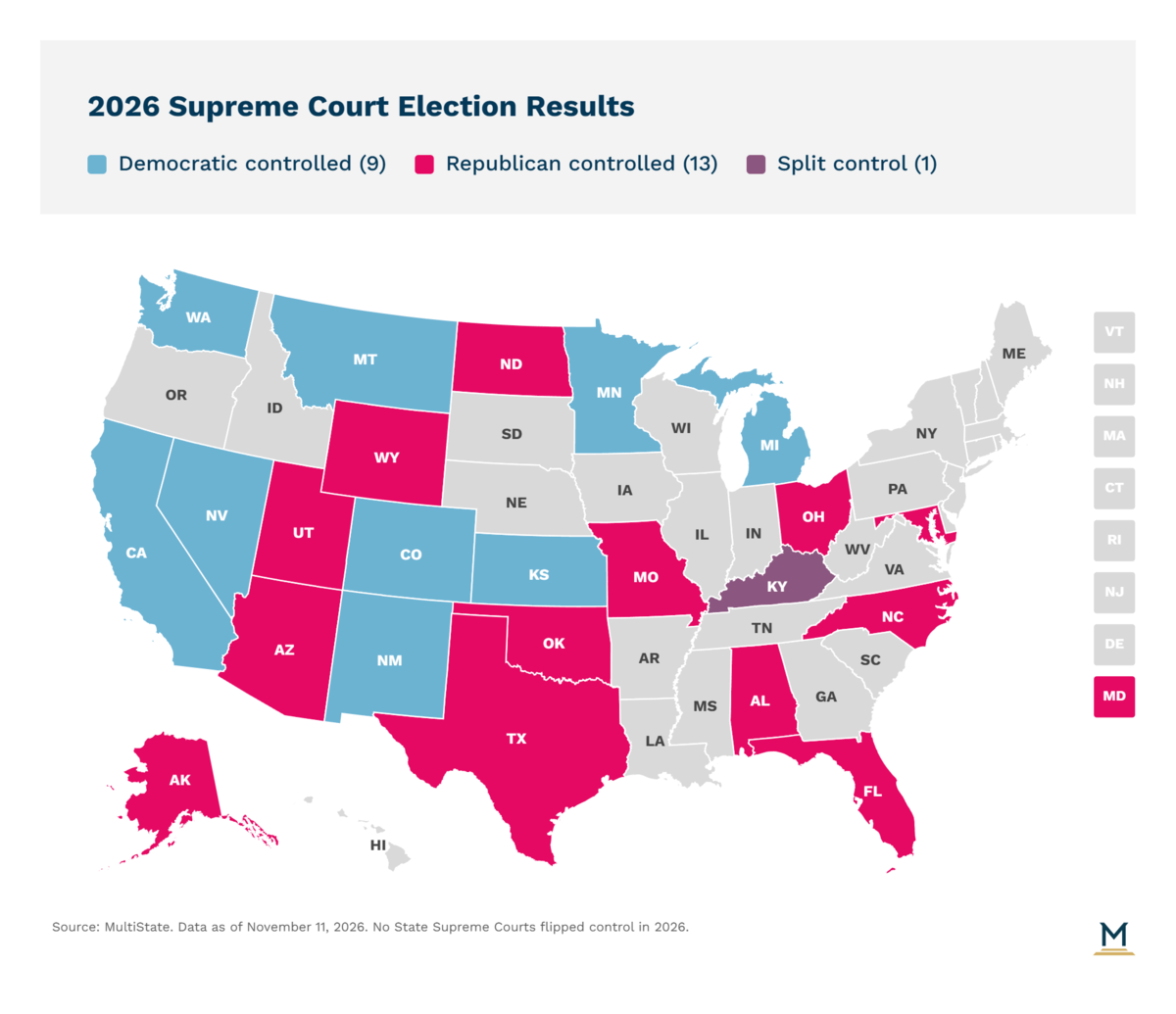
Although Democratic gains in Congress, governorships, and state houses have occupied the majority of headlines since Election Day, there were also notable election results for state supreme court justices. Twenty-three states held elections for forty-two state supreme court seats on November 3. Although many of these elections are officially nonpartisan, political endorsements and funding make the candidates' partisan leanings fairly clear. Before Election Day, nine of the supreme courts in the twenty-three states in play were controlled by Democrats, thirteen were controlled by Republicans, and one was split. While no court changed party control, Democrats gained seats in Ohio and Texas. Democratic-backed candidates won contentious races in Wisconsin and Pennsylvania last year, and that pattern continued this year in Wisconsin, Ohio, and Texas.
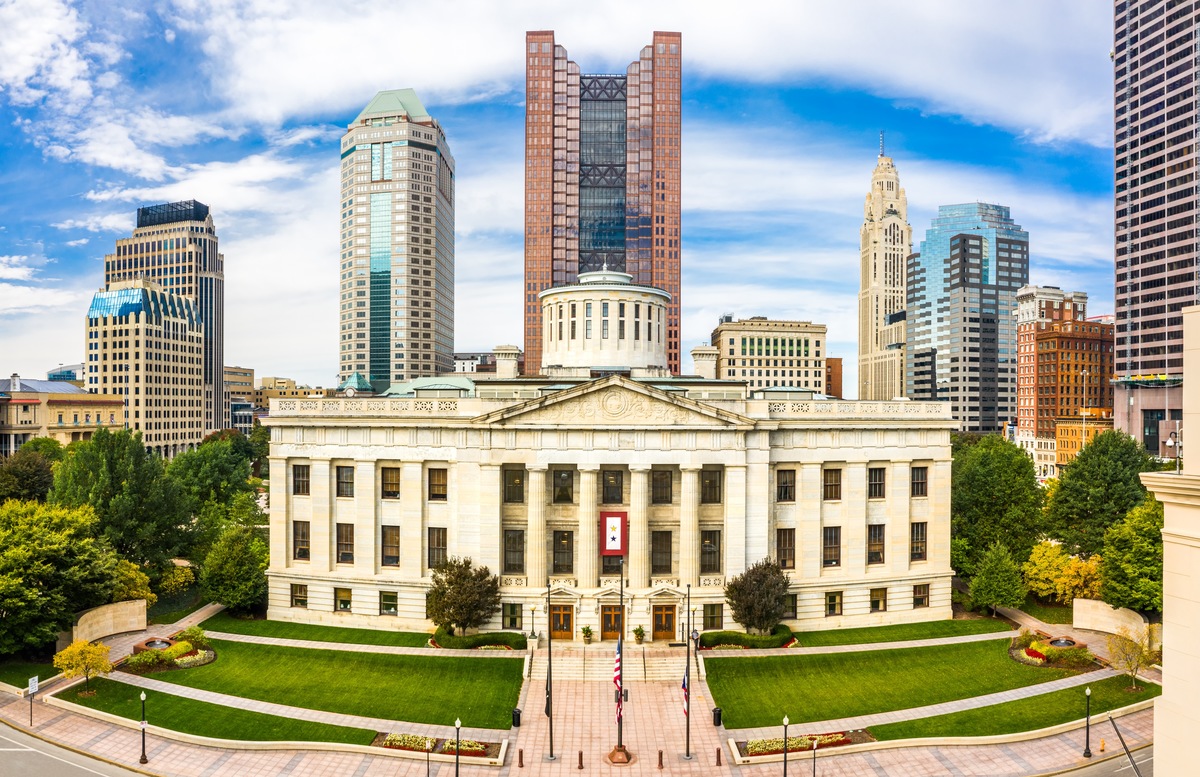
A Democratic flip of the governor's seat wasn't the only Democratic win in the state this November. Democrats in Ohio increased their representation in the state's highest court when incumbent Justice Jennifer Brunner successfully retained her seat and Democrat Marilyn Zayas defeated Republican incumbent Justice Dan Hawkins. The court will have a 5-2 split, with Republicans maintaining the majority. A shift in majority remains in play as two seats held by Republicans are up for election in 2028.
State Supreme Court
A state supreme court is the highest judicial authority within a U.S. state, responsible for interpreting state laws and constitutions and serving as the final court of appeal for state legal matters. Its decisions can have significant impacts on state policy, elections, and legal precedents.
Democrats won the governor's seat and the state House of Representatives. They also won seats on the state's highest court. Since 1999, the Texas Supreme Court has been entirely made up of Republican justices. This year, however, all four justices up for reelection lost to their Democratic challengers, including the Chief Justice. The result takes the court from nine Republicans to a slim 5-4 Republican majority. The court will now be composed of a majority of female justices for the first time in its history, with its Chief Justice, Maggie Ellis, being the first openly LGBTQ+ Chief Justice. The new mix could affect the types of cases the court hears, because it takes only four of the nine justices to agree to hear a case. Like Ohio, three of the remaining Republican justices are up for reelection in 2028, leaving open the possibility of a shift in the court's majority over the next few years.
Officially, Wisconsin's Supreme Court is nonpartisan; however, justices often receive backing from various political groups based on their judicial stances. While conservatives had been the majority on the Wisconsin court for many years, the election of Judge Janet Protasiewicz in 2023 flipped the court's makeup to a 4-3 liberal majority, the first time in fifteen years that the balance of power had shifted. Eager to either regain or retain power, groups on both sides poured money into the 2025 judicial campaign to replace retiring liberal Justice Ann Walsh Bradley, spending more than $100 million and becoming one of the most expensive campaigns in history. Liberal candidate Susan Crawford defeated conservative Brad Schimel, keeping the court's 4-3 liberal majority. In April 2026, liberals expanded this majority to 5-2 when Chris Taylor won the seat of retiring conservative Justice Rebecca Bradley. This larger majority could shape future court decisions, including a pending challenge to the state's congressional map, which opponents say is drawn to protect incumbents and limit competitive districts.
There will likely be little break between the end of the midterm campaign season and the upcoming 2028 presidential election. As of now, almost one-fourth of the 344 seats on state supreme courts will be up for election at that time, potentially having an important impact on the judicial landscape of the country.
Federal and state legal activity can have significant policy and regulatory implications for businesses and organizations. If your organization would like to further track federal and state legal activity, please contact us.
Which state supreme courts saw Democratic gains in the November elections?
Democrats gained seats in both Ohio and Texas. In Ohio, Democrat Marilyn Zayas defeated Republican incumbent Justice Dan Hawkins, and incumbent Justice Jennifer Brunner retained her seat, giving Democrats a 5-2 split on the court with Republicans still holding the majority. In Texas, all four justices up for reelection lost to Democratic challengers, shifting the court from nine Republicans to a 5-4 Republican majority.
Does the Texas Supreme Court still have a Republican majority after the election?
Yes, Republicans retain a 5-4 majority on the Texas Supreme Court. Four Republican justices lost their seats to Democratic challengers, including the Chief Justice, reducing what had been an all-Republican court since 1999. Three of the remaining Republican justices are up for reelection in 2028, leaving open the possibility of a majority shift.
What is the current partisan breakdown of the Wisconsin Supreme Court?
The Wisconsin Supreme Court currently holds a 5-2 liberal majority. Liberal candidate Susan Crawford's win kept the court at a 4-3 liberal majority, and that margin expanded to 5-2 in April 2026 when Chris Taylor won the seat of a retiring conservative justice.
How many state supreme court seats will be up for election in 2028?
Almost one-fourth of the 344 seats on state supreme courts will be up for election in 2028. In Ohio and Texas specifically, Republican-held seats are among those on the ballot, leaving open the possibility of majority shifts on both courts.
November 3, 2026 | Bill Kramer
-bf52bc-400px.jpg)
November 1, 2026 | Billy Culleton

October 20, 2026 | Bill Kramer