-3c458f-400px.jpeg)
Tax & Budgets
What You Need to Know About State Fiscal Outlook in This Fall
September 24, 2026 | Andrew Jones
March 30, 2026 | Morgan Scarboro, Kim Miller
Key Takeaways:
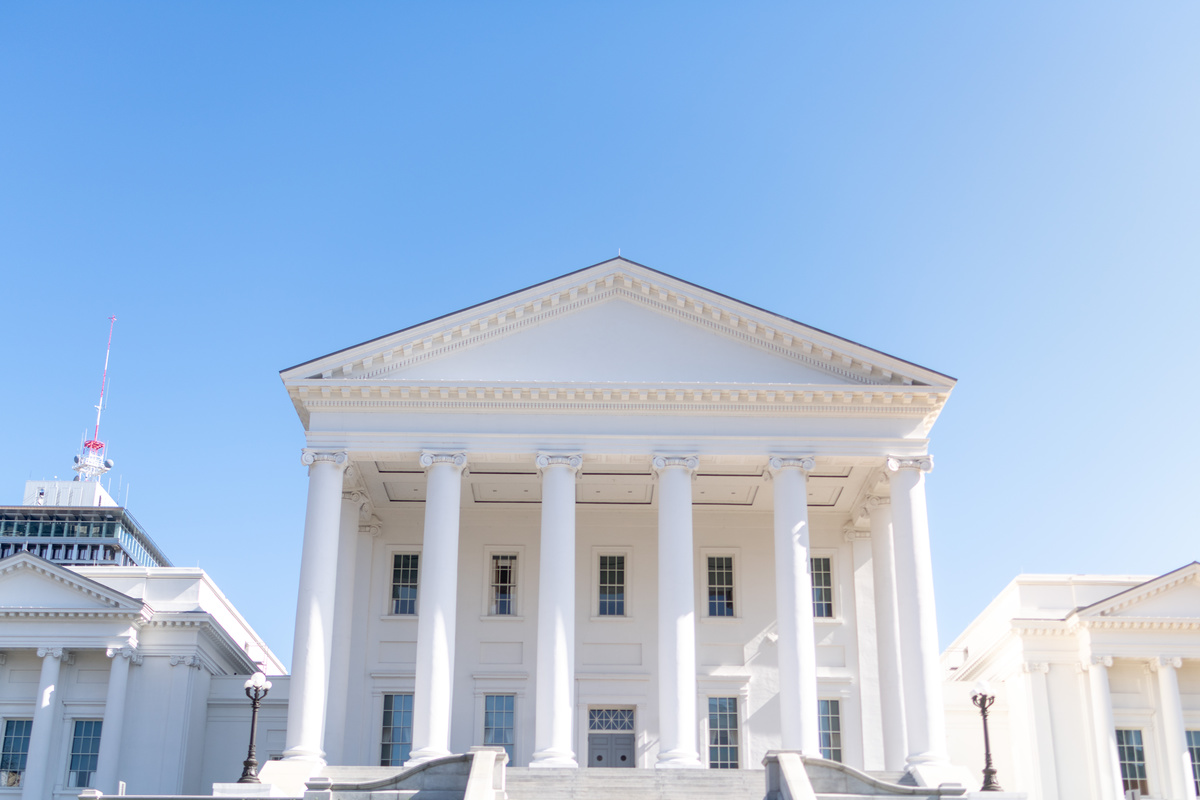
Legislators across the country have increasingly focused on data center legislation this year, but nowhere has this issue been more pressing than in Virginia. Virginia is home to the largest concentration of data centers in the world, with more than 200 data centers located in the Washington, DC, suburbs of Northern Virginia, and more continuing to be steadily approved throughout the state. Legislators from other states often look to the Commonwealth’s experience as the data center hub.
Accordingly, data centers were a major focus in Virginia this year. The legislature adjourned on March 14th after considering 61 bills directly related to data centers. Of these, 15 bills have been sent to Governor Abigail Spanberger’s (D) desk and she has until April 13th to sign or veto. Because this was the first year of a two-year session, the remaining 46 bills will be carried over into the 2027 legislative session.
The sales and use tax exemption for data centers is the primary unresolved issue of the regular session, but unlike other bills that didn’t pass this session, this issue will be settled this year as it’s playing out in the budget. The regular session adjourned without passing a budget or releasing budget conference language, and the main sticking point between the chambers is the sales tax exemption for data centers. As we’ve written previously, the exemption is the largest incentive in Virginia, with a fiscal note of about $1.6 billion annually, but the exemption has successfully attracted billions of dollars of investment in the Commonwealth. The Senate budget language would eliminate the exemption entirely, while the House language would tie the exemption to compliance with environmental restrictions. Senate President Lucas (D) has taken a hard line stance against the exemption, saying “we will not pass a budget that puts data centers tax breaks ahead of hard working Virginia families and I am not backing down now.” House Speaker Scott (D), however, says that eliminating the exemption will harm Virginia’s economy: “So it’s not just that I love data centers, I love the fact the jobs they produce. We have to be realistic about what we’re producing…good union jobs.” Governor Spanberger (D) maintains that the Commonwealth should uphold contracts it has made with businesses in the state. The legislature is scheduled to return to a special budget session on April 23rd. This dynamic playing out in a democratic trifecta state perfectly captures the notion that data center issues don’t fall cleanly upon party lines.
The Virginia legislature passed multiple bills addressing energy use related to data centers. VA HB 1393 directs Virginia’s primary electric provider to petition the State Corporation Commission (SCC) to establish rates to recover the costs of increasing electric generating capacity. The bill also requires costs for increased generating capacity to be passed on to customers with 25 MW or more in electric demand, effectively requiring data centers and other large energy users to pay for the cost of increasing capacity. The bill does, however, provide exceptions for facilities other than data centers. It allows facilities in the business of “manufacturing, industrial, or consumer goods warehousing and distribution activities other than data storage” that employ at least 200 people in the region and meet other requirements to elect to stay on their default schedule.
The General Assembly also passed VA HB 284, directing two electric providers in Virginia to create voluntary demand flexibility programs for high energy demand customers (those requiring at least 25 MW) in their respective service territories by 2029. The bill also prohibits incentive costs from those programs from being passed on to other customers.
In 2027, the Virginia legislature will continue consideration of two additional bills that passed the Senate this year. VA SB 339 directs the SCC to initiate a proceeding to determine whether electric service for high-load customers is being subsidized by other customers, and VA SB 336 requires the SCC to evaluate the impact of requiring data centers to limit use of Tier 2 generators and prioritize use of Tier 4 generators which have more strict emissions standards. Additionally, next year the legislature will also consider a bill passed by the House (VA HB 1502) establishing a one-year study analyzing the pollutants emitted by standby generators used by commercial facilities with an air permit, including data centers, which are the only facilities specifically mentioned in the legislative text.
Policymakers also passed legislation seeking to gain clarity into how much water data centers use. VA HB 496 requires water utilities that provide water to data centers to report the total volume of water that is provided to data centers each month. The legislature also passed VA SB 553, which requires proposed industrial facilities, including data centers, to submit annual water consumption estimates to allow the impact of water consumption to be considered when making rezoning and special use permit decisions.
Siting has also become an increasing concern in Virginia, and community advocates have sought to restrict data centers from being located near residential areas. VA HB 153, passed by the legislature, attempts to address a variety of siting concerns by establishing a permit process for high energy use facilities (HEUF), defined as those using 100 MW or more of energy. The bill requires HEUF zoning applicants to conduct site assessments examining a facility's sound profile on homes and schools within 500 feet. This requirement appears to be a response to concerns raised by those who live near data centers about the sound of some backup generators. The bill also allows localities to require an assessment of potential impacts on ground and surface water, agriculture, and historic resources. The provision addressing historic resources likely responds to concerns regarding a data center project that would be located near Manassas National Battlefield Park, home to two battles during the Civil War.
Last year, states considered hundreds of data center bills, and we expect activity to continue growing in 2026. To stay on top of this rapidly evolving landscape, we've launched MultiState Policy Watch: Data Centers – a subscription featuring legislative analysis, trend summaries, and expert insights across energy, tax, water, zoning, and other policy areas impacting data centers. Sign up here.
September 24, 2026 | Andrew Jones
-ffe156-400px.jpeg)
September 24, 2026 | Kim Miller
September 18, 2026 | Morgan Scarboro