Data Centers
Gubernatorial Candidates Split on Data Center Policy in 2026
September 18, 2026 | Morgan Scarboro
May 7, 2026 | Kim Miller
Key Takeaways:
In the wake of the passage and ultimate veto of the Maine data center moratorium, this week we’re exploring a parallel trend: voters in localities and at the state level are pursuing ballot measures that would impose restrictions and temporary prohibitions on data center development. In a pivotal election year, we’re going to see these efforts ramp up this summer as data centers become a top issue on the campaign trail. (This week’s piece is adapted from a recent issue of multistate.ai.)
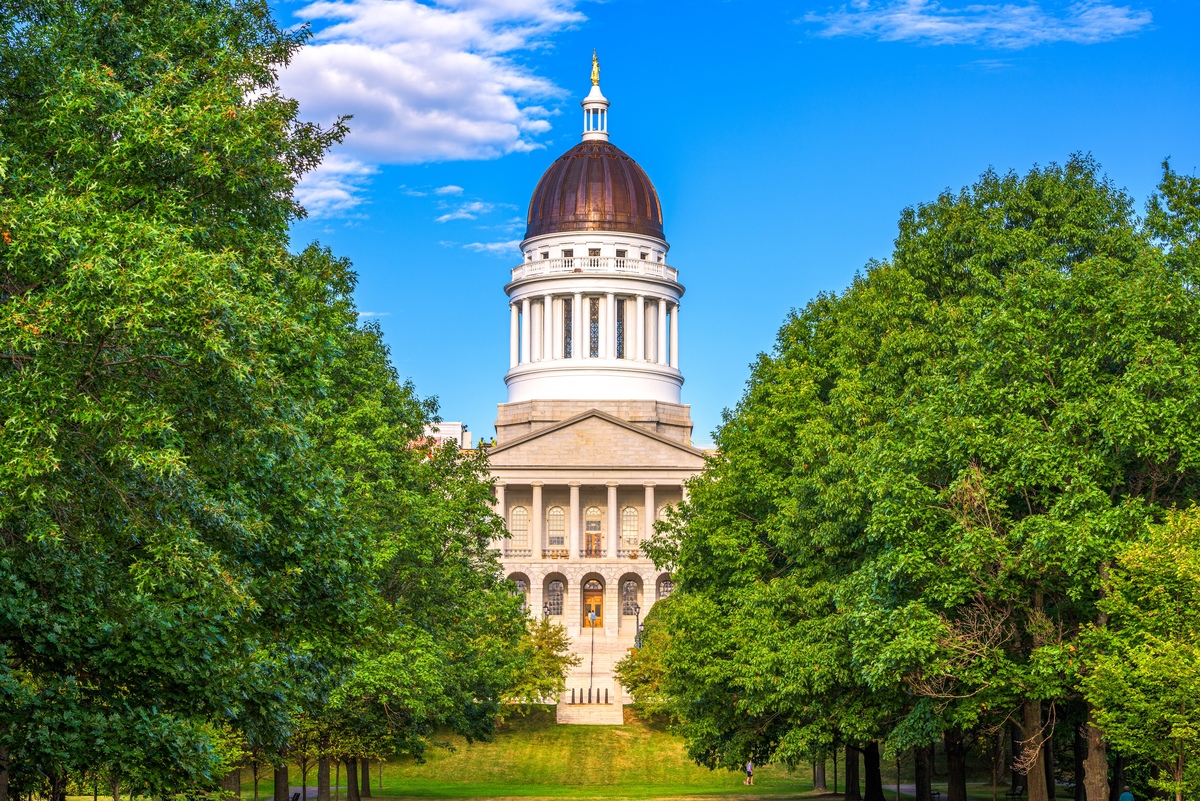
In Maine, Governor Janet Mills (D) vetoed legislation (ME LD 307) that would have paused data center construction until November 2027. In her veto message, the Governor conceded that a data center moratorium would be “appropriate given the impacts of massive data centers in other states on the environment and on electricity rates.” However, she went on to say the bill would not allow a specific project that enjoyed strong local support from proceeding.
The data center at issue in Maine illustrates how data centers can be a hyper-local issue that may be received differently depending on an individual community’s circumstances. In Maine, a data center was recently approved on the site of a former paper mill that closed in 2023. The closure of the mill resulted in the loss of hundreds of jobs and more than $1 million in tax revenue in a town of less than 5,000 people. Data center operators argue that one of the benefits data centers bring to communities are increased tax revenue and jobs, including potentially hundreds of construction jobs. Proposed data centers have drawn large crowds in many communities, however, this particular data center had no one speak for or against it when local authorities scheduled it for a vote. The data center was unanimously approved.
In an election year, state lawmakers have been more willing to take up the populist call against data centers, but the stakes of blocking economic development at the statewide level are higher than at the local level.
Statewide moratoriums face a different political calculus than local measures: legislators must weigh community concerns against tax revenue and economic development interests, and governors will often use the threat of their veto to stop moratorium efforts in their tracks.
In South Dakota, after considering a statewide moratorium on data center construction, lawmakers ultimately passed a more limited measure (SD SB 135), which prohibits the state from limiting local governments' authority to regulate or ban data centers. It didn't kill the moratorium concept, but instead granted that authority to localities. However, citizen-initiative ballot measures offer a path for advocates in 23 states to circumvent the legislative and executive branches entirely and enact moratoriums directly through votes of the people.
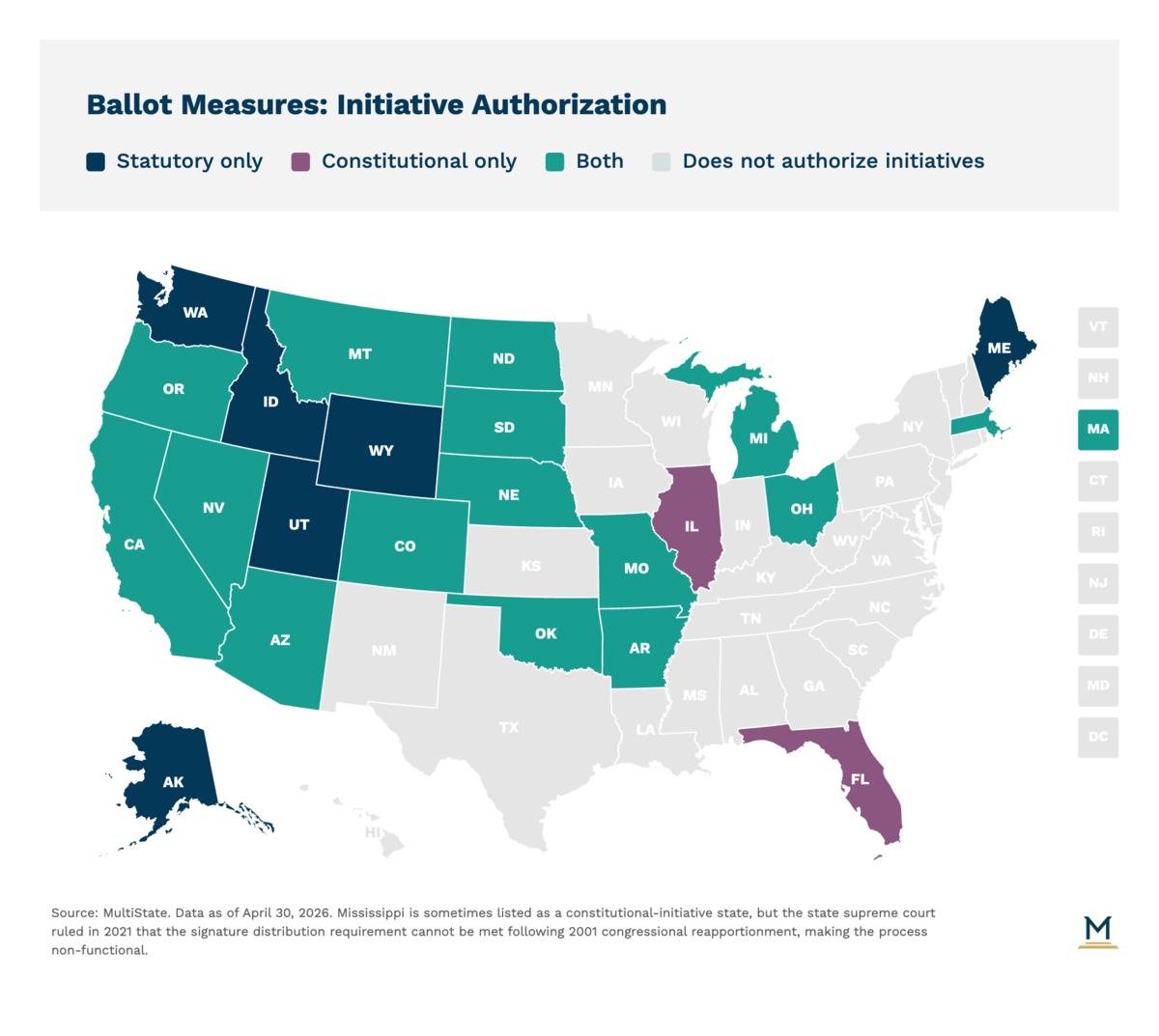
We’re seeing the beginnings of such an effort in Ohio this year. Ohio is currently home to the sixth-largest concentration of data centers in the country, with nearly 200 data centers. Virginia has the highest concentration, with more than 550 data centers, followed by Texas, California, Illinois, and Georgia.
The proposed ballot measure would ask the voters whether to prohibit the construction of data centers in Ohio that require at least 25 megawatts (MW) of power. The 25 MW threshold is notable, as many developers, particularly those looking to power AI training or inference, are seeking to build larger facilities whose demands would exceed that amount. In order to qualify for the November 2026 ballot, advocates will need to gather 413,488 valid signatures by July 1.
Local Voters Push Back Against Data Center Construction
In April, voters in Port Washington, Wisconsin approved a measure (66% for) that will require voter approval before tax incentives for data centers may be provided. In another part of the state, a measure is being considered in Janesville, Wisconsin, which would require voter approval for data center projects exceeding $450 million.
Similar sentiments and local actions are taking place across other states as well. Voters in Boulder City, Nevada, and Monterey Park, California, will decide via the ballot this fall whether to prohibit data center construction. In Monterey Park, the data center ban ballot measure has already had a chilling effect on building.
In Maryland, the Frederick County Council verified that organizers had collected enough signatures to place a referendum on the ballot to overturn last year’s ordinance approving 2,600 acres for data center development. A referendum is a slightly different version of a ballot measure. Whereas an initiative can propose a new policy, a referendum is essentially a veto by the people to overturn a statute enacted by lawmakers. The County Council must now decide whether the measure will be placed on the ballot in November or if a special election will be held. Residents of localities in Arizona and Ohio are also pursuing anti-data center ballot measures.
This list is likely to grow in the coming months, with voters in other communities currently seeking signatures for their own measures limiting data centers.
The data center ballot measure trend is still in its early stages, but the trajectory is clear. Local measures are proliferating, and Ohio's proposed statewide initiative could establish a template for similar efforts across the 23 states that allow citizen-initiated ballot measures. For companies with data center investments or AI infrastructure plans in citizen-initiative states, the window to engage with communities is before a measure qualifies for the ballot.
Last year, states considered hundreds of data center bills, and we expect activity to continue growing in 2026. To stay on top of this rapidly evolving landscape, we've launched MultiState Policy Watch: Data Centers – a subscription featuring legislative analysis, trend summaries, and expert insights across energy, tax, water, zoning, and other policy areas impacting data centers. Sign up here.
September 18, 2026 | Morgan Scarboro

September 1, 2026 | Morgan Scarboro, Izzy Aaron
August 19, 2026 | Ben Seitelman