-ffe156-400px.jpeg)
Data Centers
Voters in Six States Will Decide Future of Data Center Construction
September 24, 2026 | Kim Miller
April 14, 2026 | Morgan Scarboro, Kim Miller
Key Takeaways:
The federal government has made rapid data center construction a national priority, but state and local governments are increasingly scrutinizing new data center projects. While the Trump administration has encouraged faster permitting, streamlined environmental review, and private investment in data center infrastructure, state legislators in both red and blue states are advancing bills to regulate energy costs, require reporting, and in some cases halt construction altogether. In this week’s Policy Watch, we’re contrasting the federal approach with state activity, and whether the federal mandates have impacted states.
In July 2025, President Trump issued an executive order to rapidly and efficiently build out data center infrastructure by “easing federal regulatory burdens.” The order applies to data centers requiring more than 100 MW new electricity load, costing at least $500 million to build, or those that protect national security. Additionally, the order attempts to streamline environmental review and permitting processes, orders the Secretary of Commerce to provide financial support and incentives for qualifying data center projects, and allows the Secretaries of Defense, Interior, Commerce, or Energy to designate other data center projects subject to the order, but does not lay out any criteria to determine which projects qualify.
The order's reach, however, is largely limited to federal policies. It does not preempt state permitting requirements, zoning laws, or energy regulations, meaning a data center that meets federal requirements can still face significant state and local challenges. The order does not impact state and local policymakers’ authority over land use or utility regulations.
The EPA has moved quickly on its piece of the mandate, announcing actions to prioritize data center construction and launching a Clean Air Act resource specifically for data center developers. But this prioritization has not extended to state regulatory bodies. Many states have their own environmental review processes and streamlining federal Clean Air Act permitting does not automatically change the state process. States with independent air quality programs have maintained their own review timelines regardless of federal action.
And despite the quick change to some policies, uptake has not been uniform. A separate executive order from December 2025 directed the Secretary of Commerce to publish a list of state AI laws deemed invalid, a step that would have had direct implications for state-level AI and data center regulation, but that list has not been published to date.
On March 4, 2026, in conjunction with the White House, several major data center developers signed the Ratepayer Protection Pledge, committing to cover the full cost of new electric generation resources needed to meet their energy demands. The pledge addresses one of the central concerns driving state legislation, though it does not have a legal enforcement method, and does not appear to have stalled state legislation moving forward.
The federal edicts do not seem to have had much impact on state policymakers, even in red states who tend to be allies to the President.
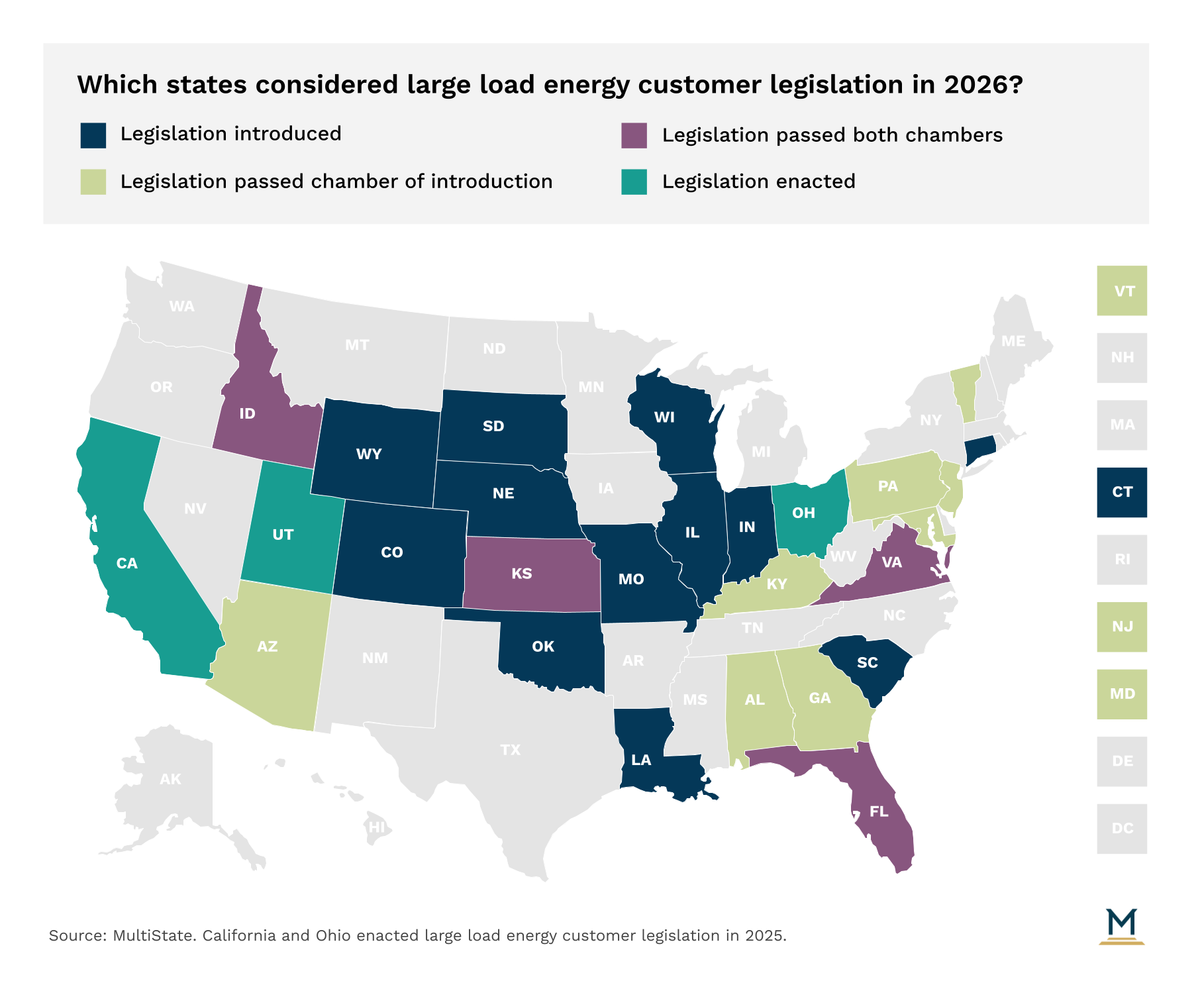
Twenty-seven states are currently considering legislation targeting "large load" customers. Comparable legislation has already been enacted in California, Ohio, and Utah, spanning the ideological spectrum. Most of this legislation requires data center developers to bear the costs of new energy infrastructure, mirroring the goals of the Ratepayer Protection Pledge but with legal force behind them. And states are taking a look at data centers of all sizes: while the federal executive order applies only to data centers above 100 MW, many state bills establish reporting requirements for facilities with energy loads as low as 10 MW.
Many states are also advancing bills requiring data centers to report water usage, an issue the federal executive order does not address. Although the order directs EPA review of the Clean Water Act, that law governs discharge of pollutants into water, not water consumption or conservation. States, on the other hand, have been increasingly focused on gathering data related to water consumption by data centers.
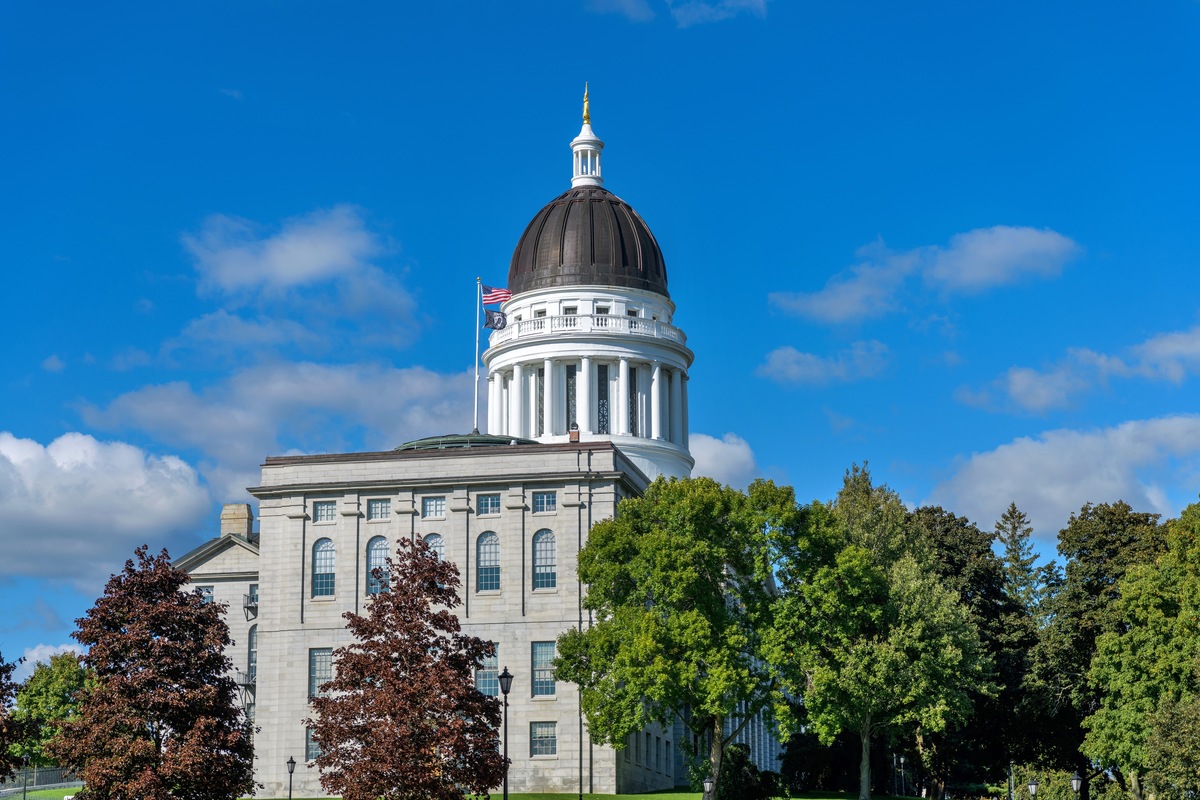
The starkest departure from the federal position is the growing number of states and localities pursuing data center moratoriums. Maine is likely to become the first state to enact one, pausing new data center construction until November 2027 to allow the legislature time to study community impacts. Several other states and many localities are considering similar measures. Critically, these efforts are not driven by a single political persuasion. Local resistance to data center development has emerged in both heavily Democratic and Republican-leaning jurisdictions.
Federal permitting streamlining is also unlikely to resolve one of the most persistent bottlenecks: interconnection delays. Getting new data centers connected to the grid remains a lengthy process largely outside the scope of the executive order.
Unless the federal government chooses to attempt to exert control over issues that have historically been controlled by state policymakers, there will continue to be tension between the goals of the federal government and local communities as these projects expand.
Last year, states considered hundreds of data center bills, and we expect activity to continue growing in 2026. To stay on top of this rapidly evolving landscape, we've launched MultiState Policy Watch: Data Centers – a subscription featuring legislative analysis, trend summaries, and expert insights across energy, tax, water, zoning, and other policy areas impacting data centers. Sign up here.
September 24, 2026 | Kim Miller
September 18, 2026 | Morgan Scarboro
September 1, 2026 | Morgan Scarboro, Izzy Aaron