
Technology & Privacy, Tax & Budgets
How States Are Taxing Digital Goods, Social Media, and Targeted Advertising
July 30, 2026 | Andrew Jones
April 30, 2026 | Katherine Tschopp

Key Takeaways:
On April 28, Maryland Governor Wes Moore (D) signed MD HB 895, making Maryland the first state in the nation to enact a groundbreaking surveillance pricing prohibition bill into law. This measure is part of a broader national effort to regulate how retailers price consumer goods and services amid rising concerns about affordability, privacy, and new technologies. Initially introduced alongside MD SB 387, HB 895 became the primary legislative vehicle in the session’s final days.
The new law bans food retailers and third-party delivery service providers from using “dynamic pricing,” which the bill narrowly defines as “the discriminatory practice of offering or setting a personalized price for a good or service that is specific to a consumer based on the consumer’s personal data, regardless of whether the seller collected or purchased the personal data,” to increase food prices for the same consumer effective October 1, 2026.
Maryland’s surveillance pricing ban is focused on food retailers and third-party delivery service providers. The law applies to food retailers, defined as “entities with locations 15,000 square feet or larger and substantial grocery operations selling food exempt from sales and use tax.” Third-party delivery service providers—merchants that deliver tax-exempt food as a consumer service—also fall under the law’s requirements. The pricing restrictions apply only to the sale of sales and use tax-exempt food, which excludes items like candy, soda, hot foods, pre-made platters, ice cream, and other foods for immediate consumption under the state tax code. During the legislative process, lawmakers further narrowed the scope of the bill to specifically prohibit covered food retailers and third-party delivery services from using dynamic pricing to increase food prices.
The measure reflects anticipated efforts to regulate pricing on essential goods such as food and gas.
HB 895 recognizes and addresses the routine changes in prices that retailers may make based on established business pricing factors. While the retail establishment may be the entity conveying the final price to the consumer, policymakers acknowledged that the retailer is not the sole arbiter of the price of a good or service. In fact, numerous factors—supply and demand, perishability, raw material availability, geographic location, seasonality, and the constant volatility of federal tariff policy—impact price-setting and are generally not considered dynamic pricing. Inadvertent price-setting resulting from correcting pricing errors or network outages are also not subject to the dynamic pricing restrictions found in the Maryland bill.
The bill protects retailers’ ability to lower prices to remain competitive and offer consumers discounts. Dynamic pricing restrictions do not apply to food retailers offering temporary discounts, promotional pricing offers, or loyalty program benefits, maintaining opportunities to lower prices for consumers. Maryland lawmakers affirmed and respected consumer choice by acknowledging that consumers have, do, and will continue to voluntarily share their personal data with retailers in exchange for valued consumer-friendly discounts and lower prices.
Maryland may not have gotten everything right. One of the largest challenges with the approach lawmakers took is the conflation of several distinct pricing methods.
Dynamic pricing is the method of adjusting prices in real-time based on demand, competition, and other market factors. HB 895’s definition of dynamic pricing would change the meaning of that term entirely to mean setting a price for a specific consumer based on that consumer’s personal data. Dynamic pricing is the umbrella term under which several other pricing methods currently fall—algorithmic pricing, surge pricing, and surveillance pricing. While often similar, their relationship is most analogous to squares and rectangles—all squares are rectangles, but not all rectangles are squares.
Proposed 2025 legislation demonstrated that algorithmic, surveillance, and surge pricing are all subsets of dynamic pricing, but not all dynamic pricing falls into all three categories. For example, as defined in Hawaii’s dynamic pricing bill, dynamic pricing refers to the real-time adjustment of the price of a good or service based on supply and demand fluctuations, supply chain issues, or other consumer trends. California legislators would like to define algorithmic pricing as any computational process, including one derived from machine learning or artificial intelligence, that processes data to recommend or set a price. After amendments, another California pricing model bill specified surveillance pricing as the setting or offering an increased price for a specific consumer or group of consumers based, in whole or in part, on personally identifiable information collected through electronic surveillance technology.
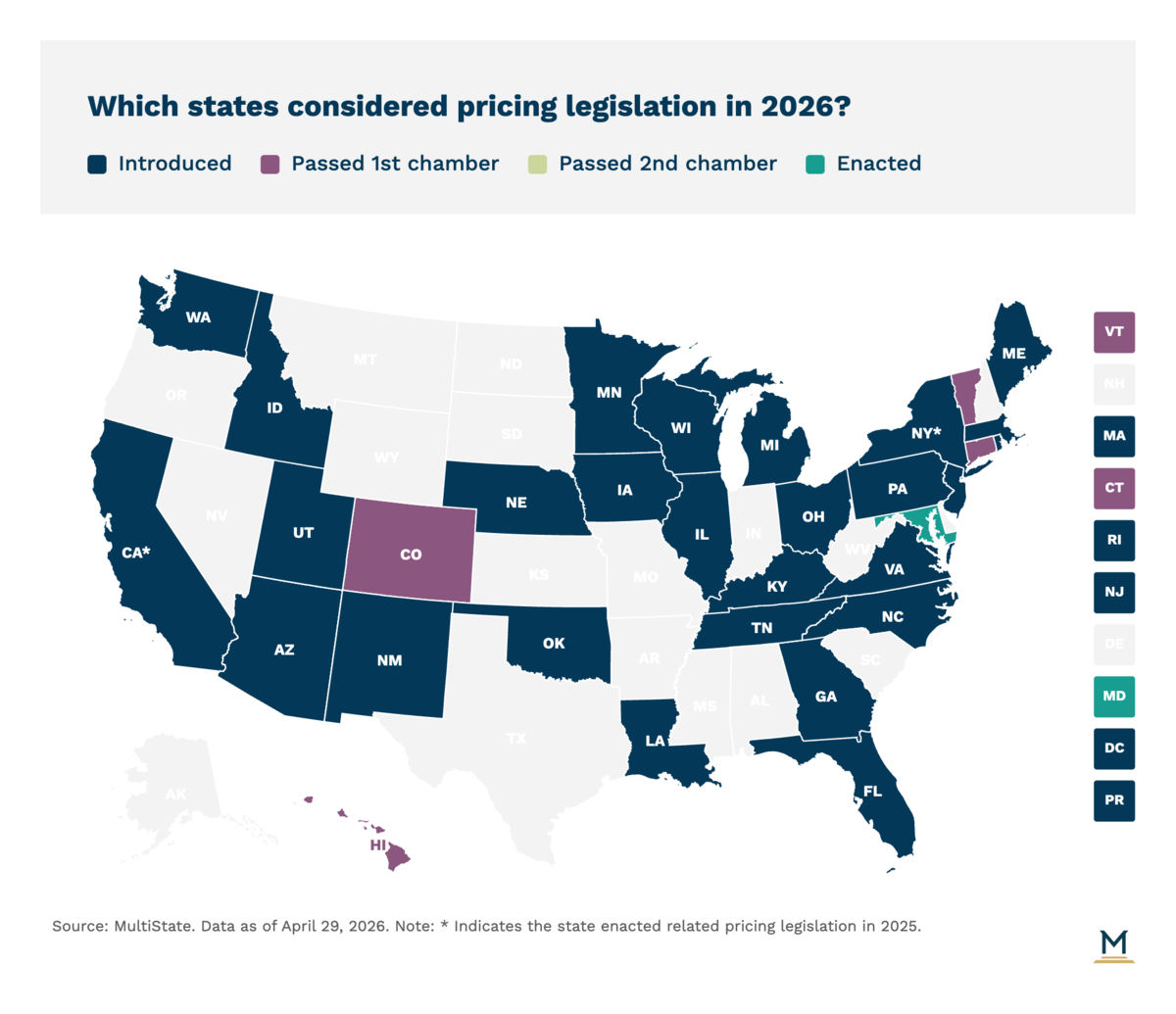
In New York’s algorithmic pricing disclosure law, included in a provision of the state’s 2025 budget, this distinction is made by defining personalized algorithmic pricing as dynamic pricing set by an algorithm that uses personal data that can be linked to a specific consumer. States should seek to mimic each other’s language in future pricing legislation and seek to explicitly define the exact type of pricing they aim to regulate for clarity, consistency, and compliance.
Maryland’s bill, while aiming to exclude standard pricing practices like supply and demand and geographic costs, uses language for exemptions that could make compliance challenging. Lawmakers seemingly intended to preserve typical market forces by stating the bill’s provisions “do not apply to” these factors. However, earlier drafts were clearer, excluding the same factors within the definition of dynamic pricing using the phrase, “dynamic pricing does not include.” Including these exemptions within the definition, as in previous versions, would emphasize that they are established, non-discriminatory price differentiation factors.
The current language, stating that the provisions “do not apply to” these price-setting components, implies they are potentially unfair or predatory practices that the bill is simply not addressing at this time. To avoid this potential confusion in other states, legislators should work to ensure that normal market pricing factors are explicitly excluded from price-setting restrictions in a way that unequivocally clarifies they fall outside the definition of the targeted pricing methods, establishing them as inherently fair and non-discriminatory, rather than suggesting they are issues to be tackled later by policymakers.
More Coverage of Pricing LegislationMultiState’s team is actively identifying and tracking technology and privacy issues so that businesses and organizations have the information they need to navigate and effectively engage. If your organization would like to further track these or other related issues, please contact us.
July 30, 2026 | Andrew Jones

April 30, 2026 | Max Rieper

April 9, 2026 | Izzy Aaron