Compliance
September 2026 Lobbying Compliance and Campaign Finance Reporting Requirements
September 1, 2026 | Izzy Aaron, Vinnie Cannamela
July 2, 2026 | Ben Zuegel
Key Takeaways:
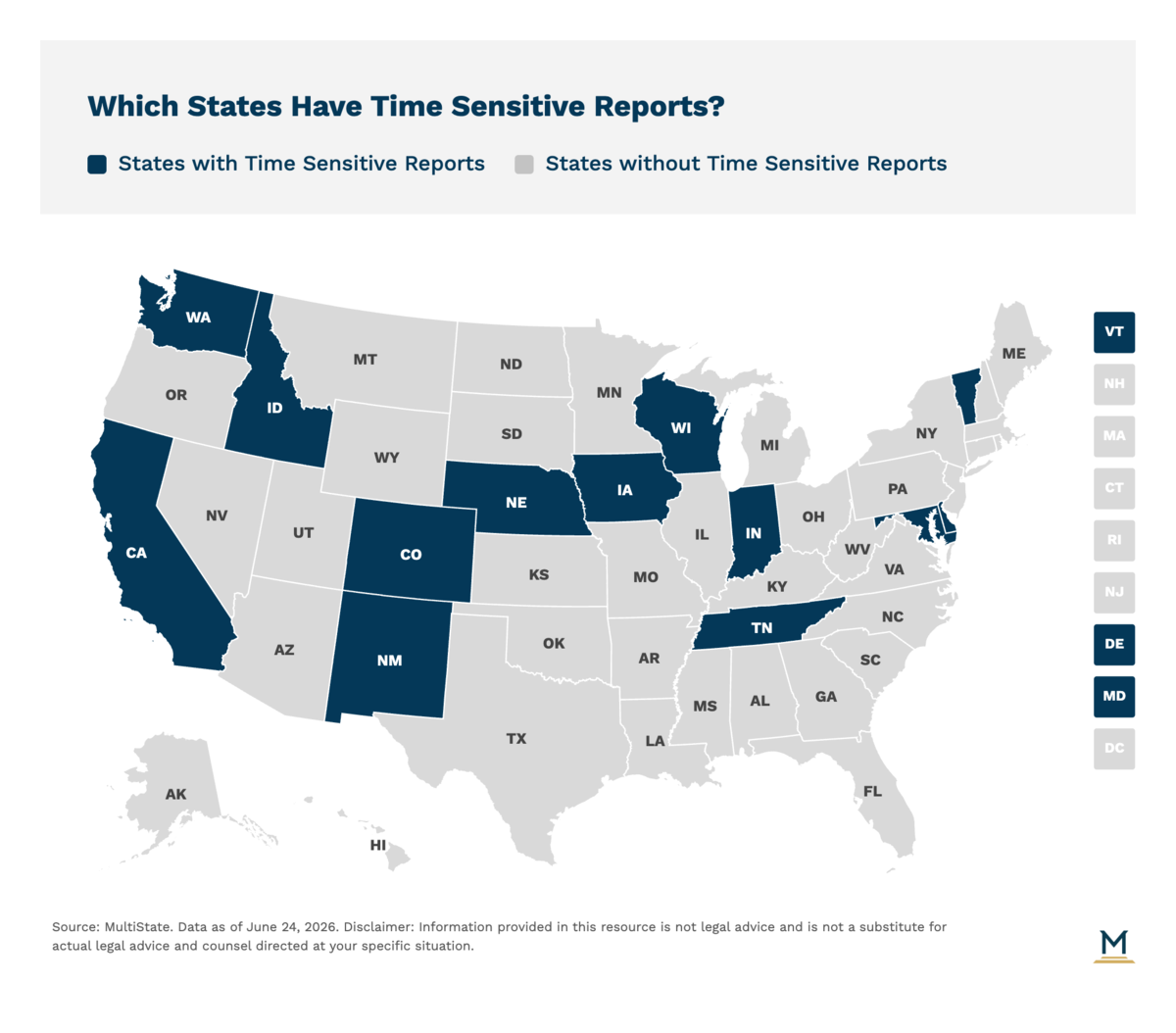
All states have regularly scheduled deadlines for lobbyists to submit their compliance reports, but a dozen states have additional reports that are due within specific timeframes based on certain criteria. It’s important to understand which states have these time sensitive reports, and when they’re required, to stay in full compliance.
Several states require lobbyists to file reports after making specific lobbyist expenses. Understanding the varieties of reportable expenditures and the monetary thresholds that trigger disclosures is key to navigating time sensitive reports in these states.
In Idaho, lobbyists are required to submit a report within 48 hours of making over $100 in indirect lobbying expenditures. Indirect lobbying is making expenditures on things like billboards, mass texts, or digital ads that encourage people to contact their legislators about a specific issue.
Indiana requires disclosures within 15 days of buying a gift for a legislator, employee of the general assembly, legislative candidate, or close relative of anyone who works for the general assembly. The value threshold for these disclosures is $50 for an individual gift or $250 for gifts with a yearly cumulative value. While Indiana allows lobbyists to give gifts to legislative persons, there are separate rules for what gifts are permissible, so be sure to check if a potential gift is allowed before giving it.
During the legislative session, lobbyists and their employers are required to report any lobbying expenses exceeding $5,000 no later than the 15th day following the end of the month in which the expense occurred. Expenses for compensation that were included on the lobbyist’s registration do not need to be included on this special report; however, if compensation of $5,000 or more was paid above what was reported on the lobbyist’s registration, a report is due.
Rather than name specific expenses that are subject to disclosure, New Mexico requires lobbyists to report any lobbyist expenditure of $500 or more that’s unrelated to their compensation, personal living expenses, or the expenses of running their office. The state requires lobbyists to file these reports within 48 hours of making the expenditure, but only while the legislature is in session, so it’s important to be aware of the legislative calendar.
Similar to Idaho, Vermont requires lobbyists to submit a report within 48 hours of spending $1,000 or more on ads or marketing intended to influence legislative action. This requirement is only in place when the legislature is in session.
Washington’s rules are a little more complicated, but amount to the same thing. Lobbyists that make $1,500 in expenses on grassroots lobbying in a one-month period, or $3,000 in a three-month period, must disclose the expenditure after it is made. Grassroots lobbying is defined the same as indirect lobbying—expenditures on marketing campaigns that encourage people to contact their legislators about a specific issue.
Lobbyists must file the report within 24 hours of the campaign’s presentation to the public if the expenditures are made within 30 days of the legislature being in session, including special sessions. The report is still mandatory at other times of the year, but the deadline is extended to 5 days after the campaign’s initiation.
Some states don’t require lobbyists to file time sensitive reports for expenditures, but do require them for events where substantial members of the state legislature are in attendance. These states require two such disclosures: one for when the invitations go out, and another after the event’s completion.
In Maryland, lobbyists must submit a pre-event report within 5 days of holding an event where the guest list includes either all members of the General Assembly, all members of a standing committee, or all members of a formally recognized county or regional delegation. The state mandates an additional disclosure within 14 days of the event taking place, which details the expenses incurred.
Tennessee’s regulations are slightly looser—event disclosures are only mandated for in-state events where all members of the legislature are invited. Lobbyists must send copies of the invitations within 7 days of the event occurring, as well as an expenditure disclosure within 30 days of the event’s completion.
A number of states require lobbyists to submit disclosures when they take a new position on a bill, executive rule, or other governmental action. They vary on how much lobbyists need to disclose, but all of them trigger when a lobbyist begins lobbying on a new issue.
Colorado requires lobbyists to list the specific bills, rules, or executive actions they’ve taken a position on. Additionally, they must signal their intentions on the issue: whether they support it, oppose it, want to amend it, or are simply monitoring it. Lobbyists report any changes to that position in follow-up reports and also indicate when they’ve stopped lobbying an issue. These reports are due within 72 hours of the lobbyist’s position change so the state remains up to date on their lobbying activities.
In Delaware, lobbyists only trigger reports if they influence the legislative or administrative process by making direct contact with certain individuals within the General Assembly or state executive. These individuals include members of the General Assembly, the Lieutenant Governor, the Governor, and employees of state agencies. Once lobbyists make direct contact with any of these individuals, they must file a report within 5 days.
Wisconsin requires lobbyists to submit a report within 15 days of lobbying on a new subject in the legislature. There’s no requirement for lobbyists to list specific bills or state their position on that subject, but it’s especially important to be mindful of this report because Wisconsin aggressively fines lobbyists that submit their reports late.
Iowa is the only state that requires disclosures for both issue positions and events. A critical difference between Iowa’s bill declarations and those of other states is that in Iowa, lobbyists must declare their position on an issue before beginning to lobby on it. There’s no specific timeframe, so long as the lobbyist files the declaration before beginning their lobbying efforts.
Function reports are much the same as in other states. Lobbyists hosting events where all 150 members of the General Assembly are invited must report the event 5 days before hosting it, and file another report 28 days after the event occurs. Additionally, the requirement only exists for events that take place while the legislature is in session.
California has a special classification of political committees, the major donor committee, which are required to file reports after donating to certain committees. State law defines a major donor committee as “an individual or business entity that uses personal or corporate funds to make contributions of $10,000 or more in a calendar year.” If a major donor committee makes $1,000 in donations to a candidate controlled political committee or ballot measure committee in the 90 days before an election, then they must submit a disclosure within 24 hours. That 90 day threshold includes primary elections, general elections, and special elections, provided the recipient committee is on the ballot in those elections.
Lastly, while the report is only triggered after giving $1,000 or more, that amount is cumulative. For example, if a committee made two separate $500 donations to the same ballot committee and both occurred within the 90 day pre-election window, the second donation would hit the $1,000 threshold and trigger a report. Although the first donation would be below the threshold, the second one would cumulatively add up to $1,000 and the major donor committee would then have to report both donations.
MultiState clients can start the filing process for these reports via the Compliance Support form in their MultiState accounts.
Keeping up with rules, deadlines, and often confusing requirements is a daunting prospect for teams of all sizes. Let us manage your federal, state, and local registration and reporting responsibilities, or manage your Campaign Finance program. Read more about our Compliance Services here, or get in touch here.
What states require lobbyists to file reports within 48 hours of certain expenditures?
Idaho, New Mexico, and Vermont require 48-hour expenditure reports under specific conditions. Idaho requires reports within 48 hours of spending over $100 on indirect lobbying expenditures. New Mexico requires reports within 48 hours of making any lobbying expenditure of $500 or more (excluding compensation and office expenses) while the legislature is in session, and Vermont requires reports within 48 hours of spending $1,000 or more on advertising intended to influence legislative action during session.
Do I need to report gifts to legislators in Indiana before or after giving them?
In Indiana, you must report gifts to legislators within 15 days after giving them, not before. The reporting threshold is $50 for an individual gift or $250 for gifts with a yearly cumulative value to a legislator, general assembly employee, legislative candidate, or their close relatives.
What triggers a time-sensitive lobbying report in Colorado?
In Colorado, lobbyists must file a report within 72 hours whenever they take a new position on a bill, rule, or executive action, or when they change their existing position. The report must specify whether the lobbyist supports, opposes, wants to amend, or is monitoring the issue, and must also indicate when lobbying on an issue has stopped.
How is Iowa's bill declaration requirement different from other states' issue position reports?
Iowa requires lobbyists to file bill declarations before they begin lobbying on an issue, not after. This is unique among states with issue position reporting requirements—other states like Colorado, Delaware, and Wisconsin require reports after lobbying activities have begun or positions have been taken.
When does Washington require grassroots lobbying expenditure reports and what are the deadlines?
Washington requires reports when grassroots lobbying expenditures reach $1,500 in one month or $3,000 in three months. If expenditures occur within 30 days of the legislature being in session, the report is due within 24 hours of the campaign's public presentation; at other times of year, the deadline extends to 5 days after campaign initiation.
September 1, 2026 | Izzy Aaron, Vinnie Cannamela
August 18, 2026 | Bradley Coffey
July 30, 2026 | Ben Zuegel, Vinnie Cannamela