
Elections & Campaigns, Tax & Budgets
Why Chicago's Budget Crisis Matters for the City's Mayoral Race
August 25, 2026 | Jose Perez
September 24, 2026 | Andrew Jones
-3c458f-1200px.jpeg)
Key Takeaways:
A state's fiscal health is a major determinant of whether it will make policy changes, such as increased or decreased spending and tax cuts or hikes. For state government affairs professionals, monitoring the states' fiscal position is crucial to anticipating and responding to policy shifts. Several times a year, our tax policy team conducts a survey of each state's short-term fiscal outlook to provide the insights needed to stay ahead.
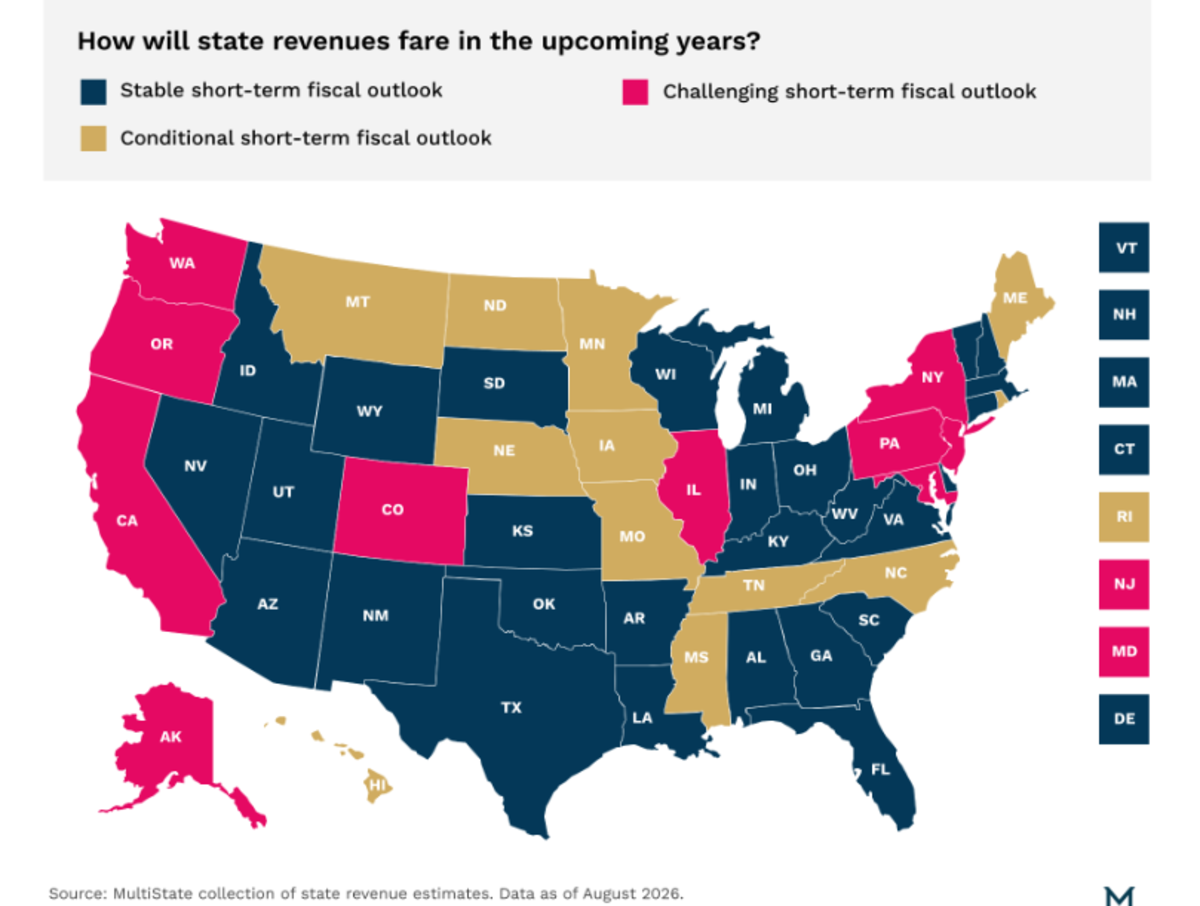
Generally speaking, a majority of states are in stable fiscal condition going into the fall, although several, including many where key tax policy decisions occur, are facing challenges. Many states are outperforming revenue estimates so far this year, meaning several projected deficits have decreased and surplus estimates have increased in states across the country. The fiscal effects of HR 1, the One Big Beautiful Bill Act, are also unclear, as many legislators say they do not understand the bill's impact on their state.
We currently rate 27 states with a generally positive fiscal outlook. These states are expected to maintain stable budgets and are less likely to face immediate fiscal pressures that could force significant policy changes. One new state to this category is Florida. Previously ranked "conditional," the Sunshine State's outyear revenue forecasts have increased enough that we are comfortable ranking it "positive" for now, though we'll keep a close eye on it.
Outyear revenue forecasts
Outyear revenue forecasts are projections of a state's expected revenue for future fiscal years beyond the current budget period. These forecasts help policymakers anticipate future fiscal conditions and make informed decisions about spending, tax policy, and budget planning.
We also have 12 states rated as "conditional," which means a state's revenue health is worth watching and could lead to either future challenges or fiscal stability, depending on policy action or extra-governmental circumstances. As of June, these states are Hawaii, Iowa, Maine, Massachusetts, Minnesota, Mississippi, Missouri, Montana, North Carolina, North Dakota, Nebraska, Rhode Island, and Tennessee. These states, politically and geographically diverse, tend to have unique circumstances that have led to lean budget years. In Nebraska, policymakers have had to deal with recurring, albeit smaller, deficits, with Gov. Jim Pillen (R) ordering additional agency spending cuts in July. On the other hand, Rhode Island, which has been operating on structural deficits, estimators found in May that the state would receive $233 million more over the next two years than planned, giving legislators a bit of breathing room in their next budgeting process.
Ten states, however, are facing serious short-term fiscal challenges: Alaska, California, Colorado, Illinois, Maryland, New Jersey, New York, Oregon, Pennsylvania, and Washington. Note that projected deficits in several of these states are lower than at the beginning of the year. Many of these states have been overperforming, in large part due to higher consumer spending and market returns than anticipated.
Tax policy can be one of the most challenging areas for government affairs executives. MultiState’s team understands the issues, knows the key players, and helps you effectively navigate and engage. We offer a customized, strategic solution to help you develop and execute a proactive multistate tax legislative agenda. Learn more about our Tax Policy Practice.
Which states have the strongest fiscal outlook heading into fall 2026?
Twenty-seven states currently have a positive fiscal outlook and are expected to maintain stable budgets without immediate fiscal pressures. Florida recently moved into this category after its outyear revenue forecasts increased. These states are less likely to implement significant tax or spending policy changes in the near term.
What does it mean when a state has a conditional fiscal outlook?
A conditional fiscal outlook means a state's revenue health requires monitoring and could lead to either future challenges or fiscal stability depending on policy decisions or external circumstances. Twelve states fall into this category as of June 2026, including Hawaii, Iowa, Maine, Massachusetts, Minnesota, Mississippi, Missouri, Montana, North Carolina, North Dakota, Nebraska, Rhode Island, and Tennessee. These states often face unique budget circumstances that have resulted in lean fiscal years.
Which states are facing the most serious budget deficits in 2026?
Ten states are facing serious short-term fiscal challenges: Alaska, California, Colorado, Illinois, Maryland, New Jersey, New York, Oregon, Pennsylvania, and Washington. However, projected deficits in several of these states have decreased since the beginning of the year due to higher-than-anticipated consumer spending and market returns.
How is HR 1 affecting state budget planning in 2026?
The fiscal effects of HR 1, the One Big Beautiful Bill Act, remain unclear for state budget planning. Many state legislators have stated they do not understand the bill's impact on their state's finances. This uncertainty adds complexity to fiscal forecasting across the country.
Why are many states outperforming their revenue estimates in 2026?
States are largely outperforming revenue estimates due to higher consumer spending and stronger market returns than anticipated. This improved performance has resulted in decreased projected deficits and increased surplus estimates across multiple states. The trend has provided some fiscal relief even in states facing budget challenges.
August 25, 2026 | Jose Perez

July 30, 2026 | Andrew Jones
July 17, 2026 | Andrew Jones