State Government Affairs
Education Policy Groups 101: National Policymaker Networks to Know If You Care About Education Policy
October 22, 2026 | Brian Peterson
November 18, 2026 | Liz Malm, Brian Peterson

Key Takeaways:
Most of the coverage of the 2026 elections has focused on which party gained or lost control, and for good reason. But for those of us who work in state government affairs, the new incoming faces matter just as much, especially the leaders of each chamber. As of today, there will be at least 46 chamber leaders next year, with 31 states having at least one chamber leader who is not returning in 2027. Fourteen states will have new leaders in both chambers while nine states will have a new Senate leader only and seven states will have a new House leader only. Nebraska's one-chamber legislature will also have a new leader.
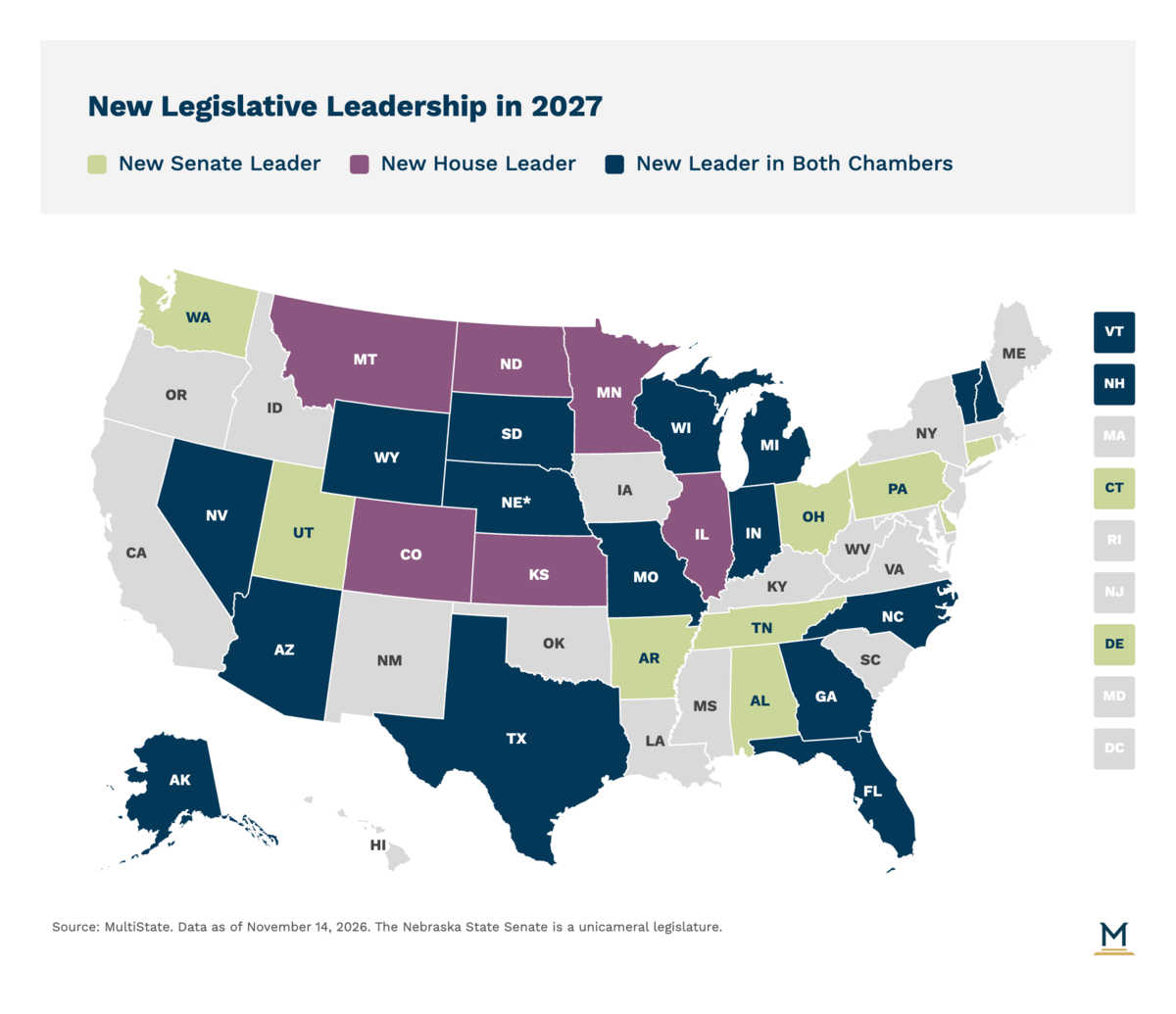
Regardless of party, a new leader brings both opportunities (new relationships) and risks (replacing someone you may have known well). Chamber leaders can decide committee assignments and which bills get a vote on the floor, so a change at the top can change what moves and who has influence. The same dynamic shows up across state government: 21 new governors will take office in 2027, the most turnover since 2010. The reasons vary regardless of office or political party. Some leaders are retiring, some ran for another office, and some lost their primaries. The next step is choosing the successors, and some are already coming into focus. Other chambers will pick their leaders in caucus votes in the coming weeks and formally elect them when the legislatures convene.
Chamber Leader
A chamber leader is the presiding officer of a legislative chamber, such as a Speaker of the House or Senate President. These leaders have significant influence over legislative priorities, committee assignments, and which bills advance to a vote.
To recap, Democrats gained control of 12 chambers in nine states in the 2026 elections, and Republicans gained none. In three states, both chambers flipped; in five, the House flipped; and Pennsylvania flipped its Senate. In all 12 of those chambers, the current leader is not returning in 2027. But a new leader does not always mean a new majority party. Florida, Indiana, and Missouri will have new leaders in both chambers with no change in partisan control. And in Texas, Republicans kept the Senate, but the Democrat who beat Lt. Gov. Dan Patrick will preside over it. Keep in mind that results are not yet certified in every state. Alaska's legislature has not been called (likely coalition). In North Carolina, one Senate race is headed to a recount. If the Republican leading it holds on, Republicans keep a 26-24 Senate majority. If the Democrat wins, the chamber splits 25-25.
When the people at the top change, the relationships you rely on can change with them. A lobbyist who knew the last leader well may need to build a new rapport with the next one, and in a state where a chamber just flipped, the whole dynamic may shift. MultiState has spent more than 35 years helping clients find the right lobbyist, with a network of more than 2,000 lobbyists in every capital city that we keep updated as political dynamics change. If you need to refresh who you have on the ground, we can help. Get in touch!
Be sure to take a look at our latest resource that summarizes all of this information in a handy reference chart (our 2027 Legislative Leadership Changes resource). We will publish a document with the names of all the new leaders soon. For the bigger picture on how many governors, lieutenant governors, attorneys general, and legislators are new to their jobs, see our Class of 2027 page in our Elections Hub, which updates automatically as races are called.
Leadership changes are still developing. We are updating the resource page as we confirm them, so check back often. Partisan control reflects election results as of November 14, 2026.
Federal and state elections and redistricting can have significant policy and regulatory implications for businesses and organizations. If your organization would like to further track federal and state elections, please contact us.
How many states will have new legislative chamber leaders in both chambers in 2027?
Fourteen states will have new leaders in both chambers heading into 2027. This includes states where partisan control changed as well as states like Florida, Indiana, and Missouri, where both chambers will have new leaders despite no change in party control.
How many governors are new in 2027, and how does that compare historically?
Twenty-one new governors will take office in 2027, which is the most turnover since 2010. The reasons for the turnover vary regardless of office or political party, with some leaders retiring, some running for another office, and some losing their primaries.
Which party gained chamber control in the 2026 elections?
Democrats gained control of 12 chambers in nine states in the 2026 elections, and Republicans gained none. In three states both chambers flipped to Democrats, in five states the House flipped, and in Pennsylvania the Senate flipped.
What happens to legislative chamber leadership when a chamber flips party control?
In all 12 chambers that flipped in the 2026 elections, the current leader is not returning in 2027. Chamber leaders can decide committee assignments and which bills get a vote on the floor, so a change at the top can change what moves and who has influence.
Are there any 2026 state legislative races that have not been finalized yet?
As of November 14, 2026, results are not yet certified in every state. Alaska's legislature has not been called and is likely to result in a coalition, and in North Carolina one Senate race is headed to a recount that could result in either a 26-24 Republican majority or a 25-25 split.
October 22, 2026 | Brian Peterson

August 31, 2026 | Sandy Dornsife
July 1, 2026 | Max Rieper