-ffe156-400px.jpeg)
Data Centers
Voters in Six States Will Decide Future of Data Center Construction
September 24, 2026 | Kim Miller
February 20, 2026 | David Shonerd, Kim Miller
Key Takeaways:
Data center legislation has exploded in popularity among state legislatures this year. In 2025, more than 200 bills addressing data center issues were introduced in more than 40 states. Now, just six weeks into the new year, more than 300 data center related bills have already been filed in more than 30 states. Sorting through the crush of proposals affecting data centers and large load energy users is a daunting task, so our Policy Watch team is zeroing in on some of the most interesting bills to watch this session.
Unlike in recent years when many states enacted bills designed to lure data centers using tax incentives and state-funded infrastructure as inducements, many states are reconsidering their apparent "open-door" policy towards data centers. We discussed this evolution in our last issue focused on tax incentives.
Now, as the scale of energy demand associated with these projects becomes clearer, states are considering measures that range from consumer protections, environmental protections, and even moratoriums on new data centers. It's very early in session for many of these bills, so be aware that bills may change and their content may be amended into budget bills or substituted into other last minute vehicle bills during the legislative process.
Trying to navigate the policy implications of data center legislation? MultiState's technology and privacy policy practice can help you understand the landscape and engage effectively. Learn more about our tracking services →
One notable shift from past years is the rise in legislation placing a moratorium on data center construction. These bills place a pause on data center construction to allow state agencies time to conduct studies on the impact data centers have on utilities, the environment, and seek feedback from local communities.
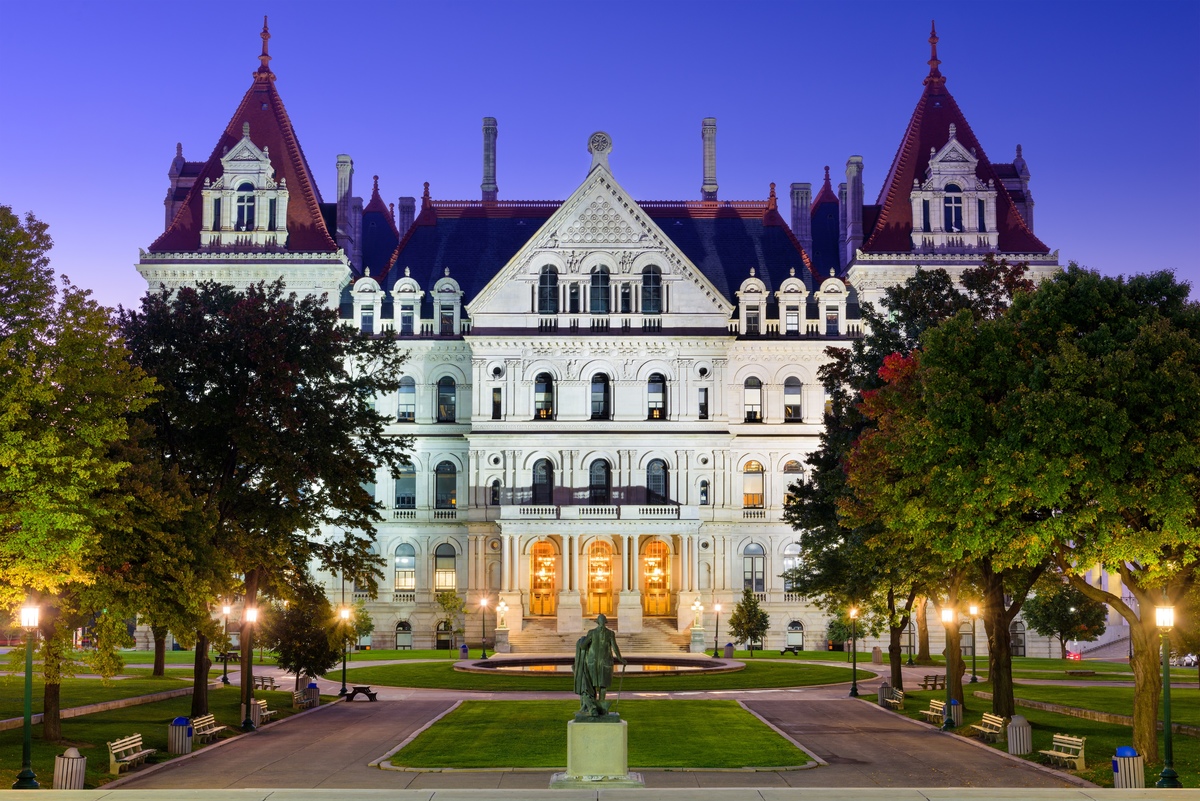
In New York, legislation has been introduced (NY A 10141 / S9144) to halt all data center construction for up to three years while the New York Department of Environmental Conservation and the Public Service Commission adopt rules designed to minimize the impact data center will have on utility rates for other customers. Senate sponsor Liz Krueger (D) has long been a leading environmental advocate in the upper chamber, and Assembly sponsor Anna Kelles (D) successfully led a moratorium on fossil fuel-fired crypto mining operations in 2022.
Other states are taking a more targeted approach to data center moratoriums:
States first began courting data centers due to the tax revenue they could potentially inject into local communities. While Loudoun County, Virginia has had great success, Virginia lawmakers are now reexamining their previous push for data centers. The Commonwealth is now under a trifecta of Democratic control with the election of Gov. Abigail Spanberger (D) and a newly enlarged Democratic majority in the House. The legislature has introduced bills taking aim at the state's tax incentives for data centers, considering legislation to reduce tax incentives for data centers to replacement equipment and make repairs (VA HB 961) as well as legislation requiring data centers to use emission-free backup generators in order to continue enjoying tax incentives (VA HB 897).
Georgia's discussion about eliminating data center credits has become more serious since our last issue. Legislators have been hyper-focused on reducing and eventually eliminating the personal income tax, and recently introduced SB 476, which would fund a reduction of the income tax by eliminating all tax credits, including the credit for data centers. The sponsor, Senator Blake Tillery (R), is also running for lieutenant governor, and specifically called out the data center credit in a discussion about the bill.
Indiana is considering a novel proposal that would require data centers to send a portion of sales taxes to local governments (IN HB 1333). Proposals requiring that tax revenue generated by data centers be reinvested in the local community may alleviate some opponents' concerns about the community contributions of data centers. While Indiana is focused on ensuring funds make their way back to communities, others are considering ending incentives altogether. In Oklahoma, where Speaker Kyle Hibbert (R), has stated that data centers will be a main focus of the Oklahoma Legislature this year, legislation has been introduced (OK HB 4424) that would end tax incentives for data centers not in operation by January 1, 2027.
States are looking at a variety of methods to ensure that data centers bear the full cost of their grid impact.
In Arizona, lawmakers are considering legislation (AZ HB 2756) that would require the state Public Utilities Commission to adopt rules ensuring that the costs of new grid connections for data centers are not shifted onto other retail customers.
Maryland SB 596 / HB 940 explores a different approach: encouraging data centers and large load facilities to participate in demand response energy programs. These programs incentivize large load electricity users to shift or reduce their peak usage times to reduce their impact on residential and other non-industrial or non-commercial electric customers. While demand response programs have been in use for years with residential customers, state-level efforts to directly involve data centers represent a newer policy development. Some companies which rely on data centers are working directly with state level governments to enter into demand response agreements.
In Washington, lawmakers are considering WA HB 2515/SB 6171, which would effectively bar data center operators from state environmental incentive programs by prohibiting certain large energy customers (i.e. data centers) from earning emissions credit under the state's cap and invest emissions trading program.
Lastly, lawmakers have continued to show an interest in establishing special rate classes for large energy users with lawmakers in at least eighteen states introducing more than 30 bills targeted at "large load" customers. While some of this legislation simply establishes a new class of rate payer with large energy demands, some legislation goes a bit further. For example, in Alabama lawmakers have introduced legislation (AL SB 270) directing the Public Service Commission to condition permits for large load customers on paying for infrastructure improvements needed to interconnect and requiring that a data center be beneficial for ratepayers statewide.
State |
Bill(s) |
Issue Area |
What It Does |
Alabama |
Special Rate Classes |
Directs the Public Service Commission to condition permits for large load customers on paying for infrastructure improvements needed to interconnect and requiring that a data center be beneficial for ratepayers statewide. |
|
Arizona |
Energy Grid |
Requires the state Public Utilities Commission to adopt rules ensuring that the costs of new grid connections for data centers are not shifted onto other retail customers. |
|
Georgia |
Tax Incentives |
Funds a reduction of the income tax by eliminating all tax credits, including the credit for data centers. |
|
Indiana |
Tax Policy |
Would require data centers to send a portion of sales taxes to local governments. |
|
Maryland |
Energy Grid |
Encourages data centers and large load facilities to participate in demand response energy programs. |
|
New York |
Moratorium |
Halts all data center construction for up to three years while state agencies adopt rules to minimize impact on utility rates. |
|
Oklahoma |
Moratorium & Tax Incentives |
Places a moratorium on data centers over 100 MW until November 1, 2029; HB 4424 ends tax incentives for data centers not in operation by January 1, 2027. |
|
South Dakota |
Moratorium |
Proposes a one-year moratorium on the expansion or new construction of hyperscale data centers. |
|
Virginia |
Tax Incentives |
Reduces tax incentives for data centers to replacement equipment and repairs; HB 897 requires emission-free backup generators to maintain incentive eligibility. |
|
Washington |
Energy Grid |
Bars data center operators from earning emissions credits under the state's cap and invest emissions trading program. |
In the coming weeks, as crossover deadlines approach and budget deadlines emerge, we will have a clearer picture of which legislative proposals gained traction with lawmakers, and which were just interesting ideas. However, it is clear that lawmakers are feeling pressure from their constituents to take into consideration how their states attract and regulate these projects.
Given the rapid pace of legislation this year, keeping up with these developments can be challenging. Reach out to the MultiState team to discuss how our team can support your efforts to monitor this, and other, legislation.
Last year, states considered hundreds of data center bills, and we expect activity to continue growing in 2026. To stay on top of this rapidly evolving landscape, we've launched MultiState Policy Watch: Data Centers — a subscription featuring legislative analysis, trend summaries, and expert insights across energy, tax, water, zoning, and other policy areas impacting data centers. Sign up here. For a comprehensive overview of the state data center policy landscape, see our State Data Center Policy 101 resource →
September 24, 2026 | Kim Miller
September 18, 2026 | Morgan Scarboro
September 1, 2026 | Morgan Scarboro, Izzy Aaron