Data Centers
Voters Target Data Centers With Local and Statewide Ballot Measures
May 7, 2026 | Kim Miller
March 3, 2026 | Billy Culleton
Key Takeaways:
Data centers are dividing governments against themselves. By now, you’d be hard-pressed not to find a story in any state that deals with data center development. The rise of artificial intelligence (AI) has spurred a frenzy of investment from the tech industry to build large-scale data centers across the country that can use up to 100 megawatts (MW) of energy to power, or enough to power 100,000 homes. And tech companies plan to build data centers that will require a gigawatt of power (1,000 MW).
Supporters of data centers tout the economic benefits, such as added tax revenue and jobs, while opponents say that data centers' heavy consumption of energy and water threatens the way of life for local communities. For lawmakers, these two camps reveal themselves in inter-governmental and intra-governmental disagreements. Recent data center debates in West Virginia and Arizona have shown how data centers can either pit locals against the state or policymakers at different levels of government against themselves.
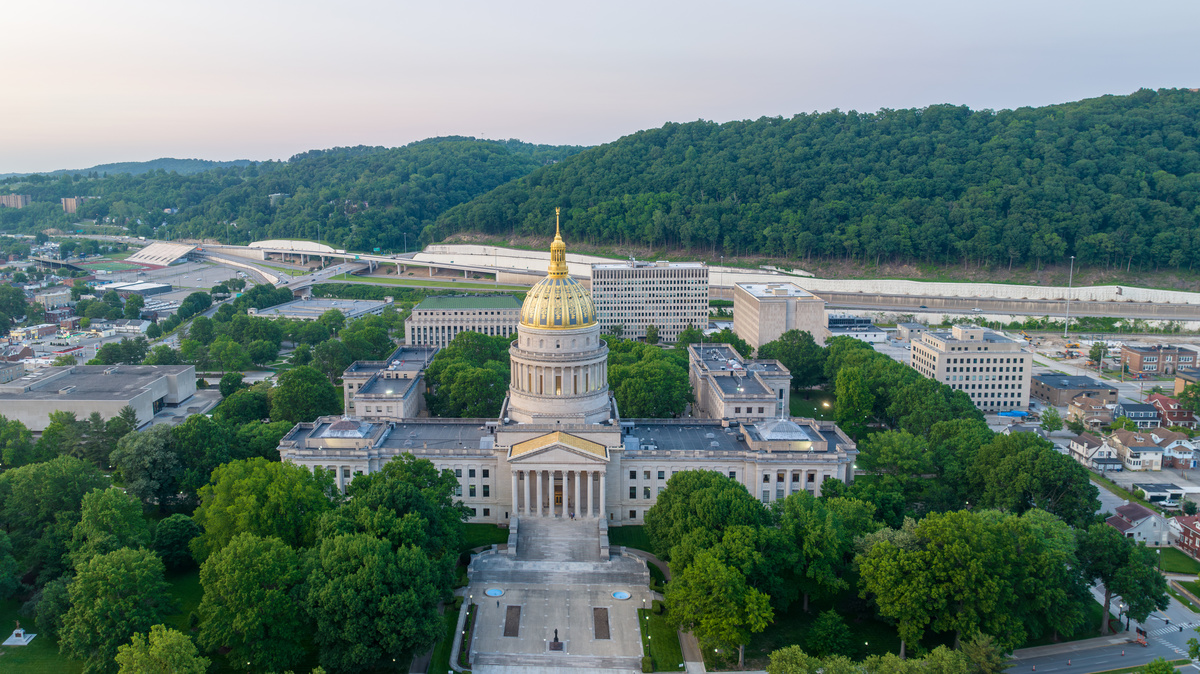
Last year, lawmakers in West Virginia enacted a law that allows data centers to operate in certified microgrid districts, which means they can operate independently from the larger electrical grid that residents use. This arrangement allows tech companies to have more control over the cost of energy to run data centers. The measure, called the Power Generation and Consumption Act, was heralded by Republican Governor Patrick Morrisey and legislative leaders as a way to boost economic growth in the state and compete directly with Northern Virginia, which is one of the largest data center markets in the world.
One proposed site in the eastern panhandle of the state is a beneficiary of the law. Fundamental Data LLC is planning to build a data center powered by a 1,656 MW on-site natural gas generation facility between the two mountain towns of Thomas and Davis in Tucker County. The project has stirred opposition from residents concerned about the impact of hosting a data center in an outdoor destination, but the project also benefits from the law's prohibition on local officials having input over where off-grid data centers are located. The resident group, Tucker United, has lobbied the legislature to reconsider the preemption provisions (WV SB 658) this session, but the measure favored by the group hasn’t moved since January.
Many lawmakers in West Virginia, however, see data center development as an opportunity for the state to reverse decades of economic decline. Senate President Randy Smith (R), who represents part of Tucker County, wants to see more control from local governments over data centers, but hasn’t endorsed the proposal to reinstate local oversight this year.
Meanwhile, the county’s other member in the Senate, Jay Taylor (R), cited data centers as a much-needed revenue source to support essential services like EMS. House lawmakers did pass legislation (WV HB 4983) this month that would require data center developers who apply with the state to flag if their project would present a harm to nearby residents. The sixteen members who oppose the bill argued the bill still does nothing to restore local oversight.
Arizona offers a different story from West Virginia on the politics of data centers. Last December, the Chandler City Council (Chandler is a suburb in the Phoenix metro area) unanimously rejected a proposal to build a 40-acre data center. While the proposal failed, the tech industry pushed hard to get a deal through. Former U.S. Senator Kyrsten Sinema even lobbied the council to approve the project in October.
At the state level, some lawmakers have shared the Chandler government’s sentiment on data centers, while others see this as a growth opportunity. As a state senator, Katie Hobbs (D) supported tax incentives to attract data centers to Arizona, as many lawmakers did at the time. As governor, though, Hobbs is pushing for a repeal of tax breaks for data centers and for imposing a penny-a-gallon fee on data centers’ water usage.
The Republican-controlled legislature has also struggled to reach a consensus on what data center development should look like from a state perspective. A bill (AZ HB 2756) that just passed the House would require regulators to adopt rules ensuring that the costs of new grid connections for data centers are not shifted onto other retail customers. Another bill (AZ HB 2795) would preempt counties from preventing the building or regulation of small nuclear modular reactors (SMRs), an ideal source to power data centers. Both bills were introduced by Republicans, but received narrow victories in the House.
Several other data center bills have been rejected this session in Arizona, too. Six Republicans joined Democrats to kill a bill (AZ HB 2452) this year that would have required local governments to include SMRs and data centers in their land use plans. A bill to map potential data center locations (AZ HB 4009) and another to allow utilities to build power plants serving data centers without an environmental review (AZ HB 2457) both failed, with a handful of Republicans joining Democrats in opposition.
The disputes in West Virginia and Arizona point to a tension that will likely define data center politics for the next several years: who decides where these facilities go and at what cost to nearby communities?
Last year, states considered hundreds of data center bills, and we expect activity to continue growing in 2026. To stay on top of this rapidly evolving landscape, we've launched MultiState Policy Watch: Data Centers – a subscription featuring legislative analysis, trend summaries, and expert insights across energy, tax, water, zoning, and other policy areas impacting data centers. Sign up here.
May 7, 2026 | Kim Miller
April 14, 2026 | Morgan Scarboro, Kim Miller
March 30, 2026 | Morgan Scarboro, Kim Miller