Employment & Labor
State AI Employment Laws Address Monitoring, Hiring, and Bias Concerns
September 21, 2026 | Kayla Susalla
September 29, 2026 | Marvin Yates
Key Takeaways:
With college football season under way, the conversation around Name, Image and Likeness (NIL) is entering another chapter. When California enacted the Fair Pay to Play Act in 2019, the question was relatively straightforward: Should college athletes be allowed to earn money from their name, image and likeness? Today, that question has largely been answered. The harder questions are now about how college athletes should be compensated, who should pay them, how much they should receive, what rules should govern those payments, and who is responsible for creating a sustainable system.
This article is a summary of the discussion of a recent panel MultiState’s Marvin Yates participated in at the 2026 National Conference of State Legislatures (NCSL) Legislative Summit in Chicago. It was moderated by Yahoo Sports' Ross Dellenger, with the following panelists alongside Marvin: Athletes.org Executive Director Brandon Copeland, Illinois House Speaker Pro Tempore Kam Buckner and Kansas State Representative Troy Waymaster.
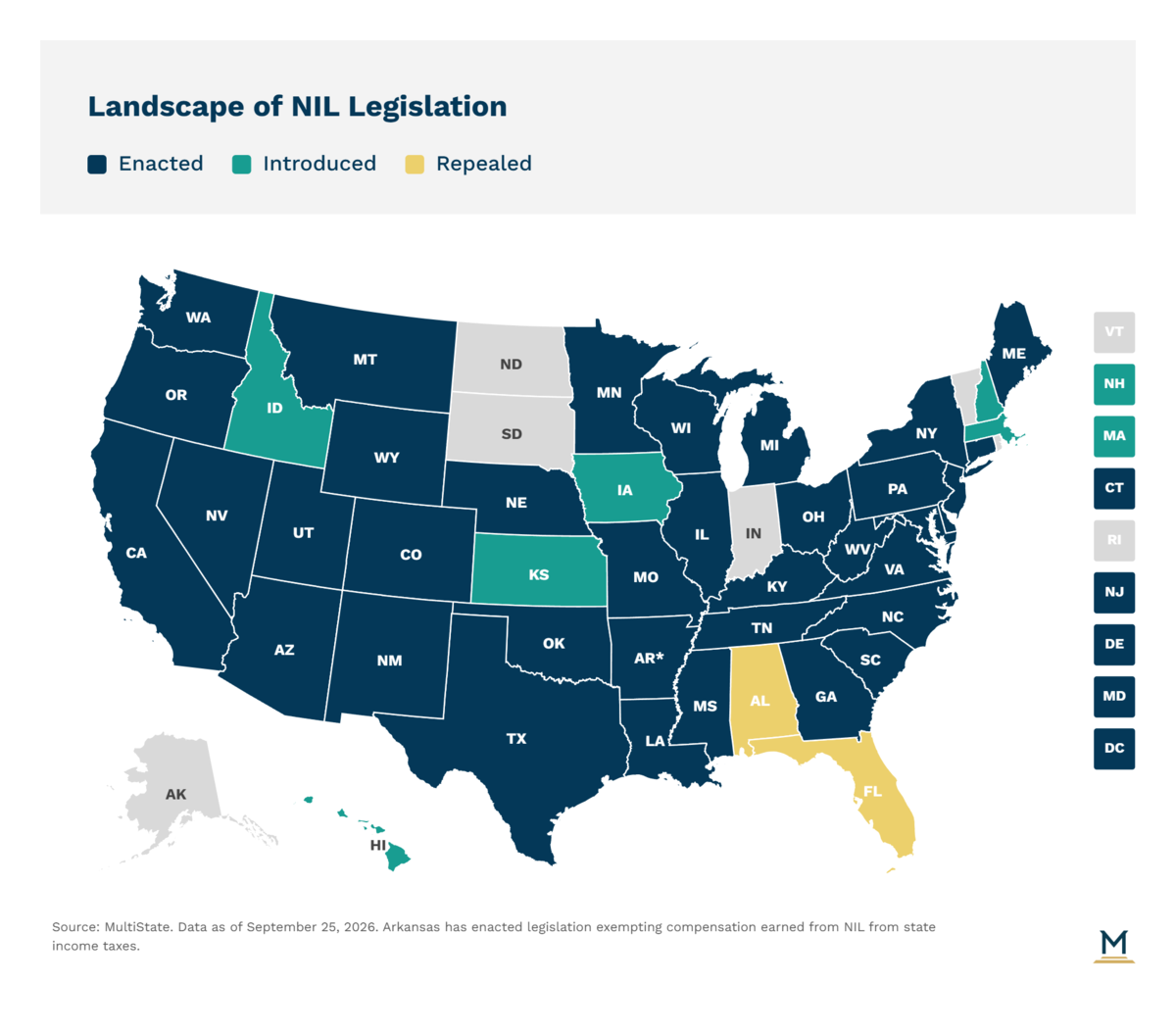
As we discussed in our recent State NIL Laws 101 article, California's 2019 legislation triggered a wave of state action. Today, 35 states have active NIL policies based on statute or executive order. The result is a patchwork of requirements on disclosure, permissible endorsement categories, agent relationships and high school NIL.
But the rules have changed dramatically since those first laws were enacted. The 2025 House v. NCAA settlement reset the economics of college athletics by allowing participating Division I institutions to provide direct financial benefits to student-athletes. For the 2025-26 academic year, the benefits cap was $20.5 million per school, and the cap grows over the life of the settlement. For 2026-27, the figure rises to approximately $21.3 million.
The picture is no longer just an athlete signing an endorsement deal with a local business. Schools can now directly share athletic revenues with their athletes while athletes can continue to pursue third-party NIL opportunities. At the same time, the College Sports Commission is reviewing third-party NIL agreements through the NIL Go system, adding another layer of oversight to a marketplace that was largely decentralized only a few years ago. In other words, NIL has evolved from a state-by-state question about endorsement rights into a central component of the business model for college athletics.
Consistency across states continues to be a challenge. The state legislative response to NIL was understandable. States wanted to protect their athletes and ensure their universities were not placed at a competitive disadvantage. Ultimately, the result was a collection of different rules governing the same national marketplace. Some states have continued to amend their laws as the market changes. Others have taken very different approaches to issues such as agent registration, high school NIL, disclosure requirements and taxation.
Name, Image, and Likeness (NIL)
Name, Image, and Likeness (NIL) refers to the rights of college athletes to profit from their personal brand, including their name, image, and likeness, through endorsements, sponsorships, and other commercial opportunities. NIL policies allow student-athletes to receive compensation from third parties or directly from their institutions, marking a significant shift from previous NCAA rules that prohibited such earnings.
From a state policy perspective, there is a difficult balance to strike. States still have legitimate reasons to protect student-athletes and address issues that directly affect their institutions and residents. The challenge is that when athletes, universities, conferences, sponsors and collectives operate across state lines, dramatically different rules can create uncertainty and competitive disparities.
Federal legislation continues to attract attention for exactly this reason. The Senate's Protect College Sports Act, for example, would establish a national framework governing compensation, eligibility, transfers, recruitment and third-party NIL arrangements while providing targeted antitrust protections for college athletic associations. Following strong bipartisan backing on procedural votes to advance the measure, the full Senate passed the landmark Protect College Sports Act in a historic 77–22 vote. With upper-chamber approval secured, the legislation now moves on to the House of Representatives for debate, where significant structural challenges, time constraints and political divisions still remain. For state policymakers, the harder question remains what role states would retain if Congress successfully implements a uniform federal framework.
Perhaps the most important question is whether the new compensation system is broadening opportunity or concentrating it. The economics of college athletics remain heavily driven by football and men's basketball. The tension surfaces as schools determine how to allocate direct revenue-sharing payments. The House settlement allows institutions to decide how to distribute their benefits pool, and this has raised concerns that the majority of new compensation could flow toward revenue-generating sports. Women's sports, Olympic and non-revenue sports, and athletes at schools outside the wealthiest conferences all have a stake in how that money is divided. Those tradeoffs matter more as policymakers consider the relationship between revenue sharing and Title IX. The federal government has specifically called for revenue-sharing policies that preserve or expand opportunities in women's and Olympic sports. Any durable NIL policy therefore has to account for the athletes with the least leverage in the marketplace.
It’s important to consider athlete protection when considering NIL. A college athlete who receives a significant NIL payment may be experiencing a level of financial success that would have been unimaginable under the old amateur model. But that same athlete may also be dealing with contracts, taxes, agents, financial planning and business obligations for the first time.
Taxation is one example. NIL income is generally taxable, and athletes competing across state lines can face complicated state tax obligations. Several states have considered legislation addressing the taxation of NIL income, with Arkansas becoming the first state to enact an exemption for certain NIL earnings.
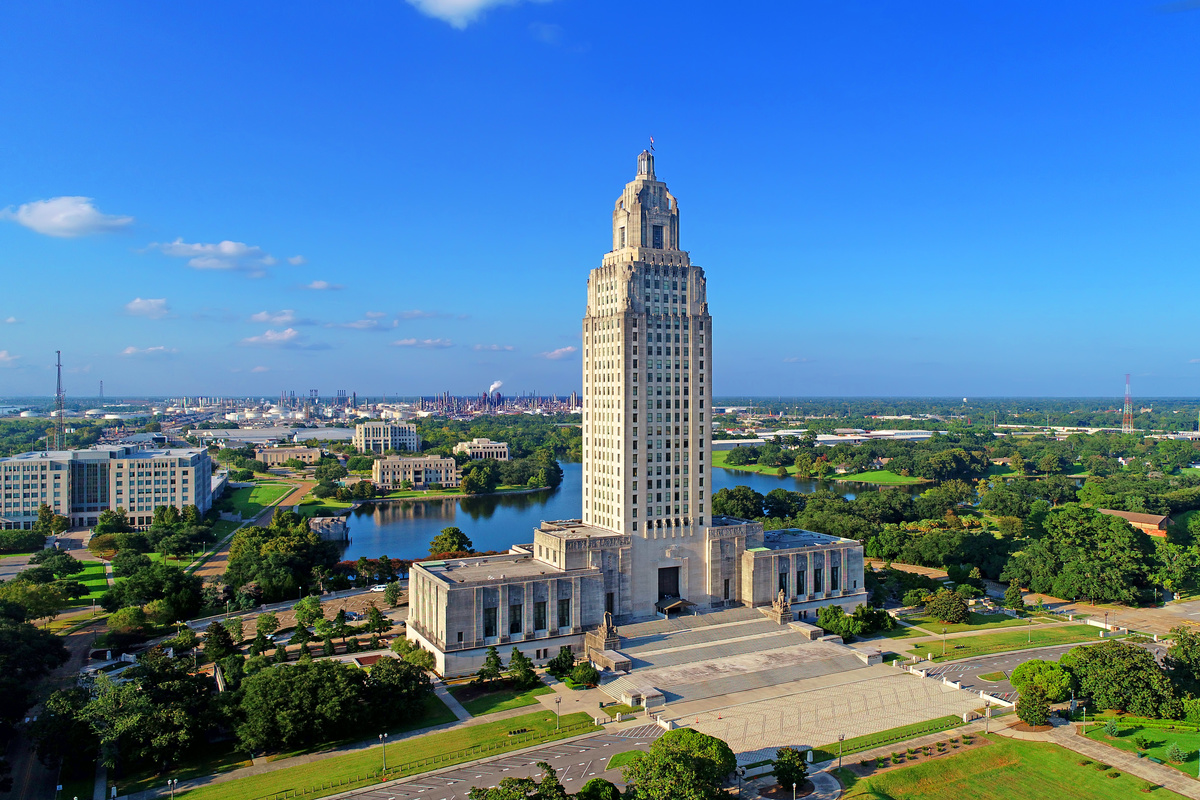
The policy question follows: Are we giving athletes the financial education and protections necessary to manage the opportunities we are creating? The answer may ultimately be as important as the compensation itself. States are already experimenting with ways to address athlete protections. Louisiana, for example, has continued to revisit its NIL framework as the marketplace has evolved, most recently with legislation addressing NIL agent registration, training and background checks. This kind of iterative policymaking may be instructive for other states. Rather than assuming a single NIL law can address every future issue, states can continue to identify gaps and adjust their frameworks as the marketplace develops.
NIL also cannot be separated from the transfer portal. What began as a policy designed to allow athletes to monetize their personal brands is now inseparable from recruiting and roster construction. For coaches and athletic departments, the combination of NIL and transfer mobility creates a new competitive environment. For athletes, it creates real leverage, but also uncertainty. The question is increasingly whether the current system provides enough predictability for schools and athletes alike. Potential solutions include clearer eligibility windows and stronger enforcement against improper recruiting inducements. Predictability does not require turning the clock back to the pre-NIL era. The useful question for policymakers is how to create predictability while preserving the mobility and economic opportunities athletes now have.
There is another issue sitting just beneath the NIL conversation: sports betting. As college athletes become increasingly commercialized and recognizable, the relationship between athlete visibility and sports wagering becomes more complicated. This is an issue we’ve seen from both the professional sports and state policy sides. The NCAA has urged states to eliminate individual college athlete prop bets, citing concerns about competition integrity, harassment and athlete well-being. In January 2026, the NCAA reported that 36% of Division I men's basketball players surveyed said they had received harassment from someone with a betting interest. More than half of the states with legal sports betting, along with Washington, D.C., still allow individual college prop bets in some capacity. In addition, the growth of prediction markets has created another unique angle to lead to additional collegiate athlete challenges dealing with sports event contracts, increased gambling and consumer protection/integrity issues.
The issue is sharper in the NIL era because athletes are no longer simply participants in college sports. They are also brands. Commercialization, social media, athlete privacy, gambling and integrity all collide at that point. The NCAA has also asked federal regulators to pause college sports offerings in prediction markets until appropriate safeguards are in place. For states considering sports betting policy, college athlete prop bets deserve particular attention.
The current status quo seems difficult to sustain. A more sustainable system could include: a clearer national framework, continued state experimentation, better transparency, more athlete education, reasonable transfer and eligibility rules, protection of women's and non-revenue sports, and stronger sports-betting guardrails.
A national marketplace needs a baseline set of rules, particularly around compensation, eligibility, transfers and NIL enforcement. However, states should retain the ability to address athlete protections, education, agents and issues uniquely affecting their institutions. Transparency would be improved with clearinghouses and reporting requirements to help distinguish legitimate NIL arrangements from disguised pay-for-play. They would also provide greater certainty to athletes and institutions. The current NIL Go system requires reporting of qualifying third-party NIL agreements and provides a mechanism for compliance review. And any system should have guardrails against sports betting. College athlete prop bets present unique integrity and athlete-welfare concerns.
On the athlete's side, financial literacy, taxes, contracts, agents, branding and long-term financial planning should be treated as essential parts of any NIL system. Athletes should have mobility and meaningful choices when it comes to transfer and eligibility rules, but institutions also need enough predictability to build sustainable programs.
Additionally, the growth of football and men's basketball cannot come at the expense of the broader educational and athletic opportunities that college sports provide, including women's and non-revenue sports.
Above all, it appears that NIL is no longer really just about NIL. The original debate was about whether college athletes should have the right to profit from their name, image and likeness. Today, we are debating a much larger question: What should the economics of college athletics look like in the 21st century? The answers will affect state budgets, higher education, women's sports, Olympic sports, recruiting, taxation, sports betting and the relationship between universities and their athletes. State legislatures helped drive the original NIL transformation. They now have another opportunity: to help build a system that is more transparent, sustainable and protective of the athletes at the center of college athletics.
MultiState’s team is actively identifying and tracking Name, Image, and Likeness (NIL) issues so that businesses and organizations have the information they need to navigate and effectively engage. If your organization would like to further track these or other related issues, please contact us.
What states currently have NIL laws for college athletes?
35 states have active NIL policies based on statute or executive order as of 2026. California's Fair Pay to Play Act in 2019 triggered this wave of state action, resulting in a patchwork of requirements on disclosure, permissible endorsement categories, agent relationships, and high school NIL. Louisiana and Arkansas are among the states that have continued to update their NIL frameworks as the marketplace has evolved.
How does the House v. NCAA settlement change college athlete compensation?
The House v. NCAA settlement allows participating Division I institutions to provide direct financial benefits to student-athletes, with a cap of $20.5 million per school for the 2025-26 academic year and approximately $21.3 million for 2026-27. Schools can now directly share athletic revenues with their athletes while athletes can continue to pursue third-party NIL opportunities. The College Sports Commission reviews third-party NIL agreements through the NIL Go system, adding oversight to what was previously a largely decentralized marketplace.
What is the status of the Protect College Sports Act?
The Senate passed the Protect College Sports Act in a 77–22 vote following strong bipartisan backing on procedural votes to advance the measure. The legislation now moves to the House of Representatives for debate, where significant structural challenges, time constraints, and political divisions still remain. The bill would establish a national framework governing compensation, eligibility, transfers, recruitment, and third-party NIL arrangements while providing targeted antitrust protections for college athletic associations.
Which states allow sports betting on individual college athletes?
More than half of the states with legal sports betting, along with Washington, D.C., still allow individual college athlete prop bets in some capacity. The NCAA has urged states to eliminate these prop bets, citing concerns about competition integrity, harassment, and athlete well-being, and reported in January 2026 that 36% of Division I men's basketball players surveyed said they had received harassment from someone with a betting interest.
Are college athletes required to pay taxes on NIL income?
NIL income is generally taxable, and athletes competing across state lines can face complicated state tax obligations. Arkansas has passed an exemption for certain NIL earnings, and several other states have considered legislation addressing the taxation of NIL income as part of their broader athlete protection frameworks.
September 21, 2026 | Kayla Susalla
July 30, 2026 | Sandy Dornsife

June 29, 2026 | Izzy Aaron